You have 0 items in your cart
There are very few genuinely new fly-fishing destinations left in Africa. Most of the continent’s iconic fisheries have long since earned their place on every serious angler’s bucket list. On the tigerfishing front, the latest discoveries being Tanzania’s legendary Mnyera and Ruhudji rivers (Hydrocynus tanzaniae) , the Chinko in CAR (Hydrocynus goliath), and the Malagarasi in Tanzania (Hydrocynus vittatu) – each of these fisheries shifting the paradigm on what fly fishing for tigerfish is all about. Shangaa Tigerfish Camp, on the The Nyerere Dam, represents the cusp of another.
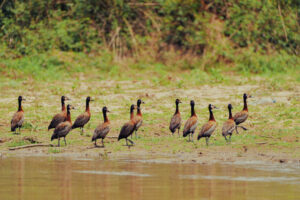
Hidden deep within southern Tanzania, surrounded by one of the largest protected wilderness landscapes on Earth, the Julius Nyerere Dam is (not so quietly any more) emerging as one of Africa’s most exciting freshwater fisheries. Not because it promises to replace the great river systems that came before it, but because it offers something they simply cannot.
It offers the rare opportunity to witness the birth of a fishery.
For many anglers, the stories of Kariba Dam early years have become almost mythical. Tales of flooded forests alive with baitfish, engorged tigerfish, untouched shorelines and an ecosystem bursting with life have become part of African fishing folklore. Those stories shaped generations of anglers, yet very few people alive today experienced those formative years themselves. The Nyerere could change this. Not a copy of Kariba, nor an attempt to recreate it, but a chance to experience a remarkable fishery while its story is still being written.
The Julius Nyerere Hydropower Project has created a vast 1,200 km² reservoir where the Great Ruaha River joins the mighty Rufiji before beginning its journey towards the Indian Ocean. When African Waters first began exploring the dam alongside the Six Rivers Foundation in August and November of 2025, the objective extended far beyond simply finding another place to catch tigerfish. The question was much bigger than that. Could carefully managed fly fishing tourism become another tool for conservation within one of Africa’s most important wilderness ecosystems? Those first exploratory trips quickly revealed something remarkable.
A thriving populations of Tanzania tigerfish (Hydrocynus tanzaniae), healthy numbers of baitfish, a visibly strong populations of vundu, miles of flooded timber and endless productive shoreline suggested that something very special was developing beneath the surface. Ironically, the fishery exists because of one of mankind’s most ecologically damaging interventions (dam building) in this natural landscape. The merits of which, are polarizing depending on one’s stance.
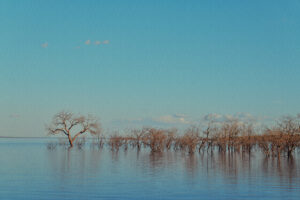
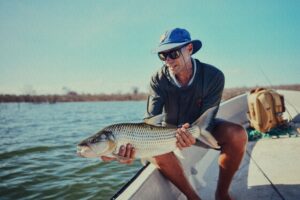
Yet nature above the dam wall has responded in extraordinary fashion. Like many newly formed reservoirs, Nyerere is currently benefitting from an explosion of biological productivity. Vast tracts of woodland and grassland were inundated as the reservoir filled, releasing enormous quantities of organic material into the water. Combined with the immense nutrient load delivered annually by the Rufiji catchment, the result has been an exceptionally fertile aquatic ecosystem. Every great predator fishery begins with its food chain. Nutrients, baitfish, predators. Layer upon layer, the entire system builds itself from the bottom up.
Flooded forests provide sanctuary for juvenile fish, submerged river channels create natural highways through the reservoir and wind-driven shorelines concentrate bait into predictable feeding zones. Everywhere you look, the ingredients for an exceptional predator fishery are present. Simply put, everything a tigerfish could possibly need is here.
The obvious comparison is Lake Kariba. After all, both are immense African impoundments holding tigerfish. In reality, however, the similarities largely end there. Kariba has evolved into one of Africa’s great recreational fisheries. Houseboats drift across its open water, lakeside towns bustle with activity and public access extends across much of its shoreline. It remains one of the continent’s iconic destinations, but it has become part of the human landscape that surrounds it.
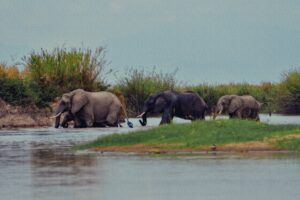
Shangaa Tigerfish Camp, on the Nyerere Dam is something entirely different. The reservoir sits almost completely enclosed by Nyerere National Park and the adjoining Selous Game Reserve, together protecting well over 50,000 square kilometres of African wilderness. There are no marinas. No rows of fishing lodges. No lakeside settlements. No flotillas of recreational boats.
When pushing off for a day on the water here, it feels far less like fishing a dam than fishing inside one of the world’s last great wilderness ecosystems. That surrounding landscape changes everything. Most large dams eventually become destinations centred almost entirely around the fishing itself. Fishing the Nyerere, like Africa’s finest tiger fishing rivers, is still, and hopefully will remain, just as much about the wilderness as it is about the fish
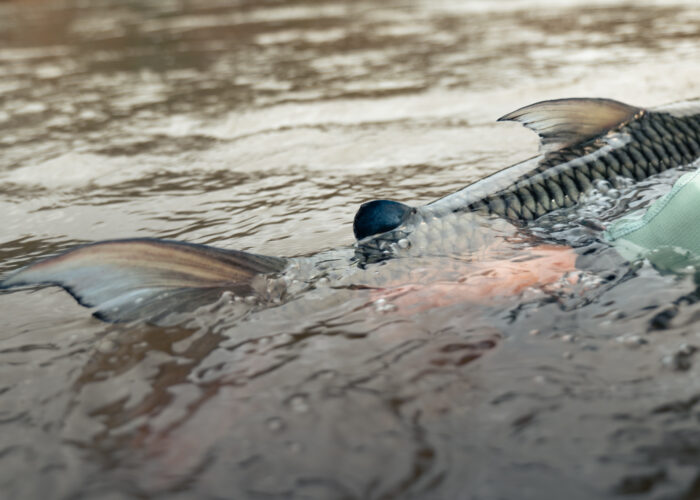
For the fly angler, however, it is the behaviour of the tigerfish in Nyerere that truly captures the imagination. Tigerfish have always enjoyed a reputation as one of freshwater’s most aggressive predators, but on Nyerere they seem to take that reputation to another level.
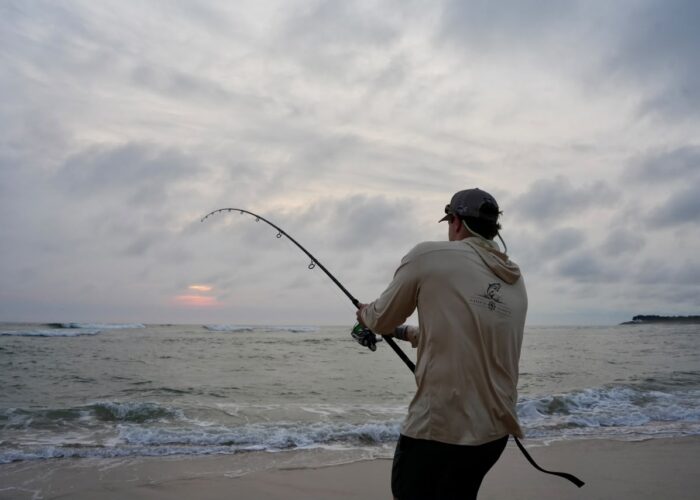
Once a school of fish is found, what begins as a single fish often develops into complete chaos as more predators are drawn towards the commotion. This wont last for evey, as fish become attuned to the pressure of catch and release angling. But for now, competition fuels aggression. Hook one fish and several more frequently charge after it, attempting to steal what appears to be an easy meal. Fish race behind stripping flies until the very last second before committing. Others materialise beside the boat without warning, turning the final few metres of every retrieve into a test of nerves and composure.
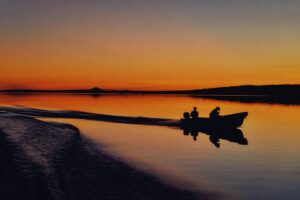
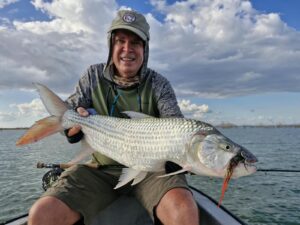
During the most intense feeding frenzies, almost anything that moves becomes a target. Flies disappear almost as quickly as they land. Rod tips have been attacked during fast retrieves. Landing nets have been bitten while another tigerfish is being brought alongside. It is difficult to think of another scenario where tigerfish displays such relentless aggression. The Nyerere experience feels less like traditional fly fishing than close-combat battle. It is wonderfully visual, wonderfully chaotic and utterly addictive.
Perhaps even more exciting than what anglers are catching today is what they may catch tomorrow. Unlike the more familiar Hydrocynus vittatus found on large dams in Africa, the fish inhabiting the Rufiji Basin are Tanzania tigerfish, Hydrocynus tanzaniae. While this remarkable species has become famous through the Mnyera and Ruhudji rivers, very little is understood about how it performs inside a large impoundment.
Nobody knows how large Hydrocynus tanzaniae is capable of growing under these conditions. How long will they remain as aggressive and inquisitive as we see them now,? How will angling pressure affect the fishery over the years and will commercial fishing operations ever be introduced to the Nyerere are a few of many questions, with no immediate answers. History suggests that abundant forage, nutrient-rich water, and low fishing pressure provide the perfect ingredients for exceptional predator growth. The sense of the unknown is part of what makes the fishery so compelling.
Tigerfish may dominate the headlines, but they are far from the only apex predators thriving within the reservoir.
The dam supports extraordinary populations of vundu catfish (Heterobranchus longifilis), one of Africa’s true freshwater giants. These immense catfish can exceed fifty kilograms under favourable conditions, and every indication suggests that Nyerere possesses exactly the combination of abundant food, healthy water and available habitat needed to produce exceptional fish.
Although relatively few fly anglers target them specifically, their abundance says something important about the health of the ecosystem. Great predators only exist where the entire food web functions as it should. They are an indicator species, and their presence in good numbers is not only exciting from a fly fishing perspective, but a useful barometer to measure fishery health.
Perhaps the greatest lesson Nyerere offers has little to do with fishing itself. History has shown what happens when exceptional freshwater fisheries develop around unrestricted human access. Kariba and Cahora Bassa both experienced extraordinary productivity during their early decades. Yet over time, expanding settlement, commercial harvest, subsistence fishing and illegal netting gradually changed those ecosystems. Conversely, fisheries with strict access and careful management such as the Mnyera and Ruhudji Rivers have set the bench mark for how sustainable fly fishing can drive large scale conservation success and a thriving fishery.
Nyerere begins its journey from a positive standpoint. Access and geography being its greatest assets. The surrounding wilderness, restricted access through national parks and game reserves naturally limits access to the water. There are no communities dependent upon the reservoir for daily harvest, and very little exploitation of the fishery itself.
Working alongside organisations such as the Six Rivers Foundation, our objective has never simply been to establish another fishing destination, but rather to demonstrate how carefully managed catch-and-release tourism can contribute to the long-term protection of wild freshwater ecosystems, as well as skills development and employment in the tourism sector. Healthy fisheries require healthy rivers and healthy ecosystems. The Mnyera, the Ruhudji are proof of this, and serendipitously form part of the same interconnected system. Close to three decades of protecting those rivers ultimately protects everything downstream, including the Nyerere – a young fishery that is only now beginning to reveal its potential.
Perhaps this is what makes Shangaa Tigerfish Camp on the Nyerere Dam so exciting? It is not simply another destination where anglers can catch tigerfish. It is a fishery still writing its own story. Every season will reveal fresh observations about fish behaviour, and new possibilities. Every day on the water adds another piece to the puzzle of what Hydrocynus tanzaniae may ultimately become inside one of Africa’s largest protected reservoirs. We are excited to be part of the story.
Years from now, anglers may look back on these early seasons in much the same way previous generations remember Kariba during its infancy. The difference is that this time, conservation has the opportunity to lead from the beginning. In an age where truly wild places are becoming increasingly rare, the Nyerere Dam reminds us why we travel in the first place. Not simply to catch fish. But to immerse ourselves in landscapes where the fishing cannot be separated from the wilderness that surrounds it, where every cast feels like a privilege, and where the next generation of one of Africa’s great fly fisheries is only just beginning to emerge.