You have 0 items in your cart
Megalops Atlanticus
When anglers talk about tarpon, they usually say the name with a grin. Scientists call them Megalops Atlanticus, and over these two weeks in Port-Gentil, that name carried real weight. After a long stretch of late rains and frustrating wind, the pattern finally shifted. Proper rain arrived, the wind backed off, and suddenly the conditions lined up for classic tarpon flyfishing.
Cloud cover, calmer seas and small, manageable tides made spotting fish easier and presentations far more controlled. You could slow down, read the water, and fish deliberately rather than reactively. For you as an angler, this is when Port-Gentil really opens up.
Week One: Calm Seas, Cooperative Tides and Big Fish
We welcomed three South African anglers, Dan, David and Garth, for four days of flyfishing that delivered consistent action from start to finish. With small tides and low wind, we found a mix of laid-up fish and active, rolling schools feeding on bait.
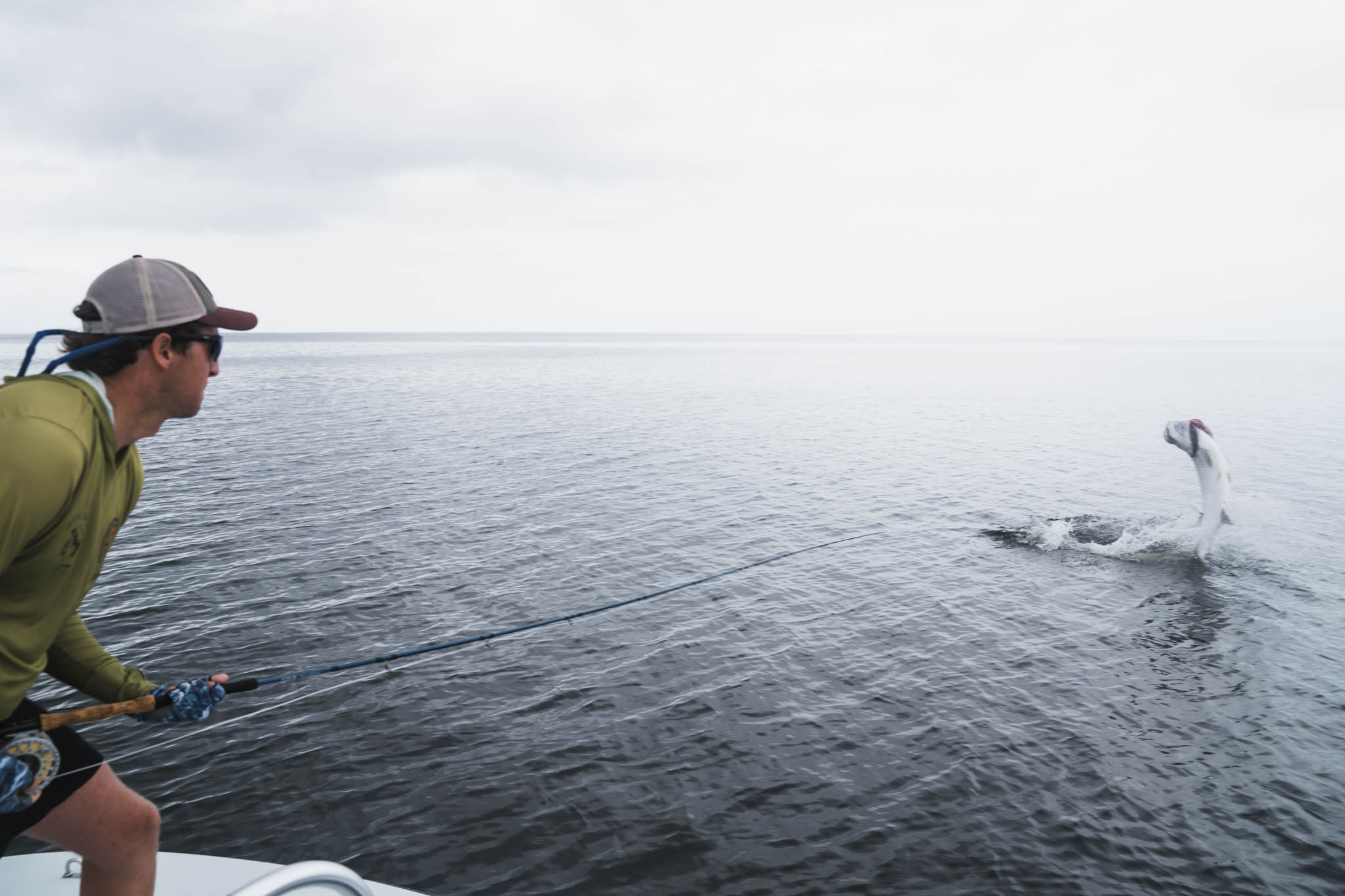
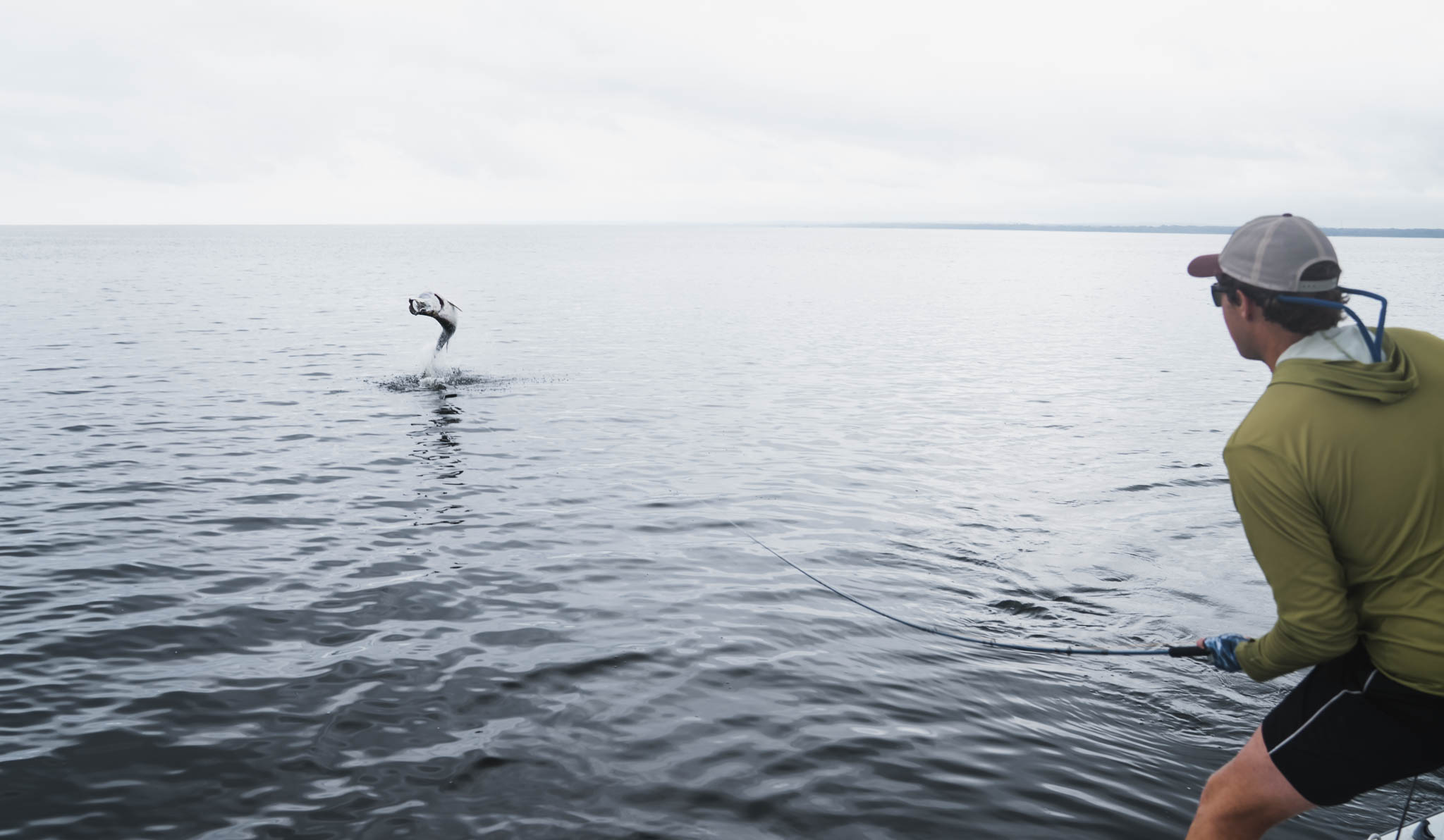
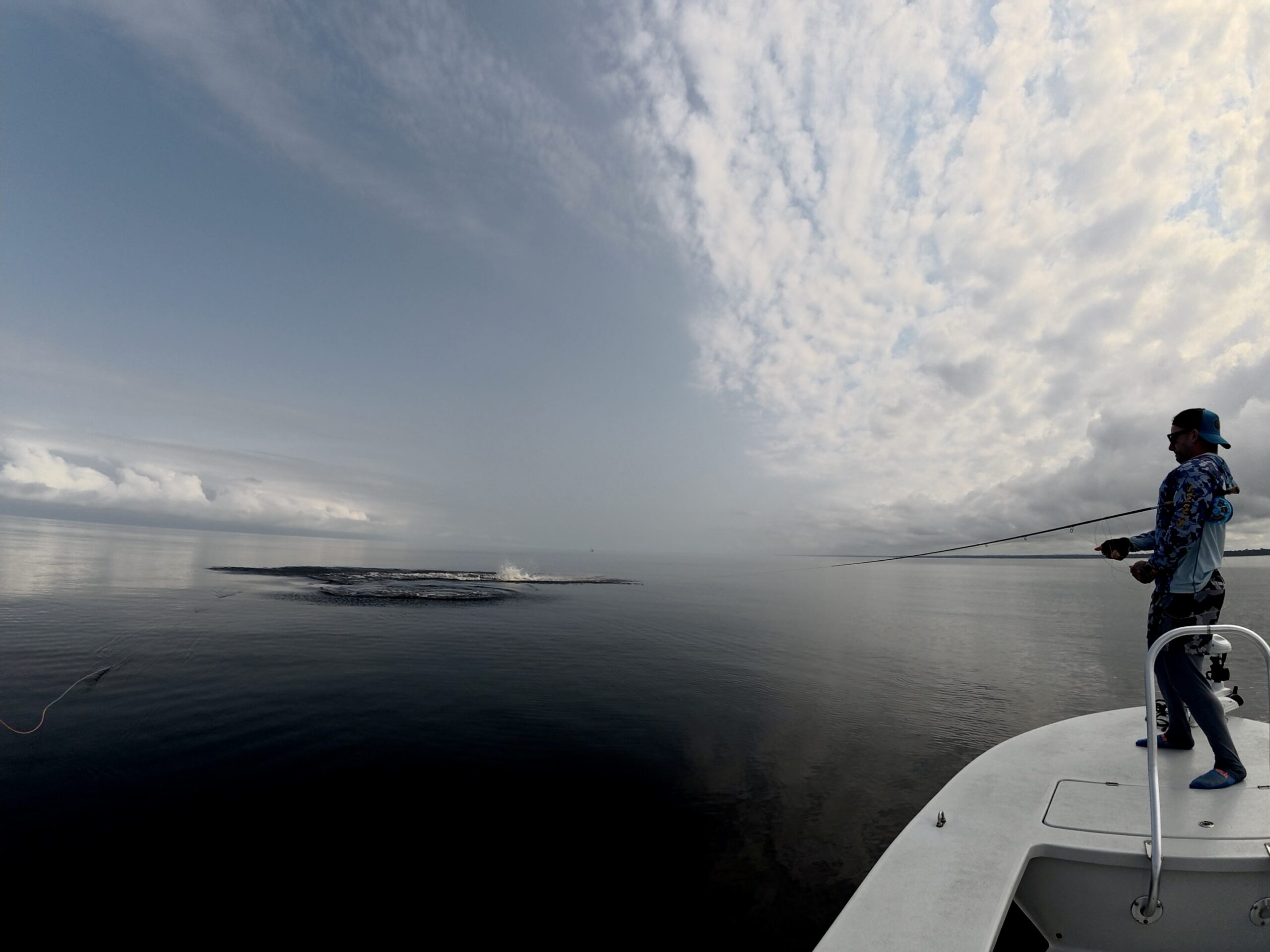
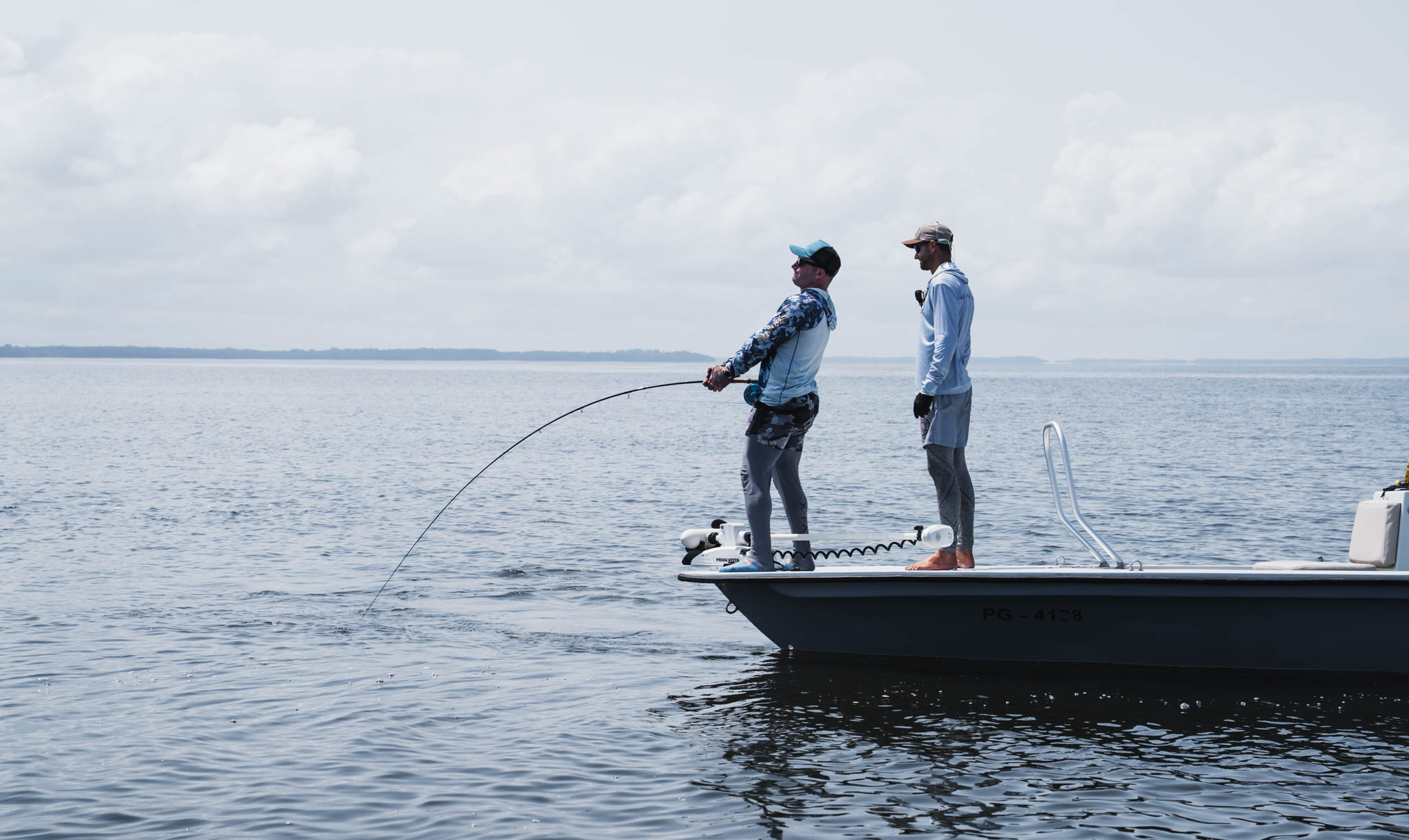
Laid-up fish demanded patience and accuracy. Slack tides and glassy conditions meant precise casts and subtle presentations. Rolling fish were a different game altogether, following strings of moving tarpon and placing the fly ahead of the school to intercept them at the right moment. Switching between these two styles kept the days varied and engaging.
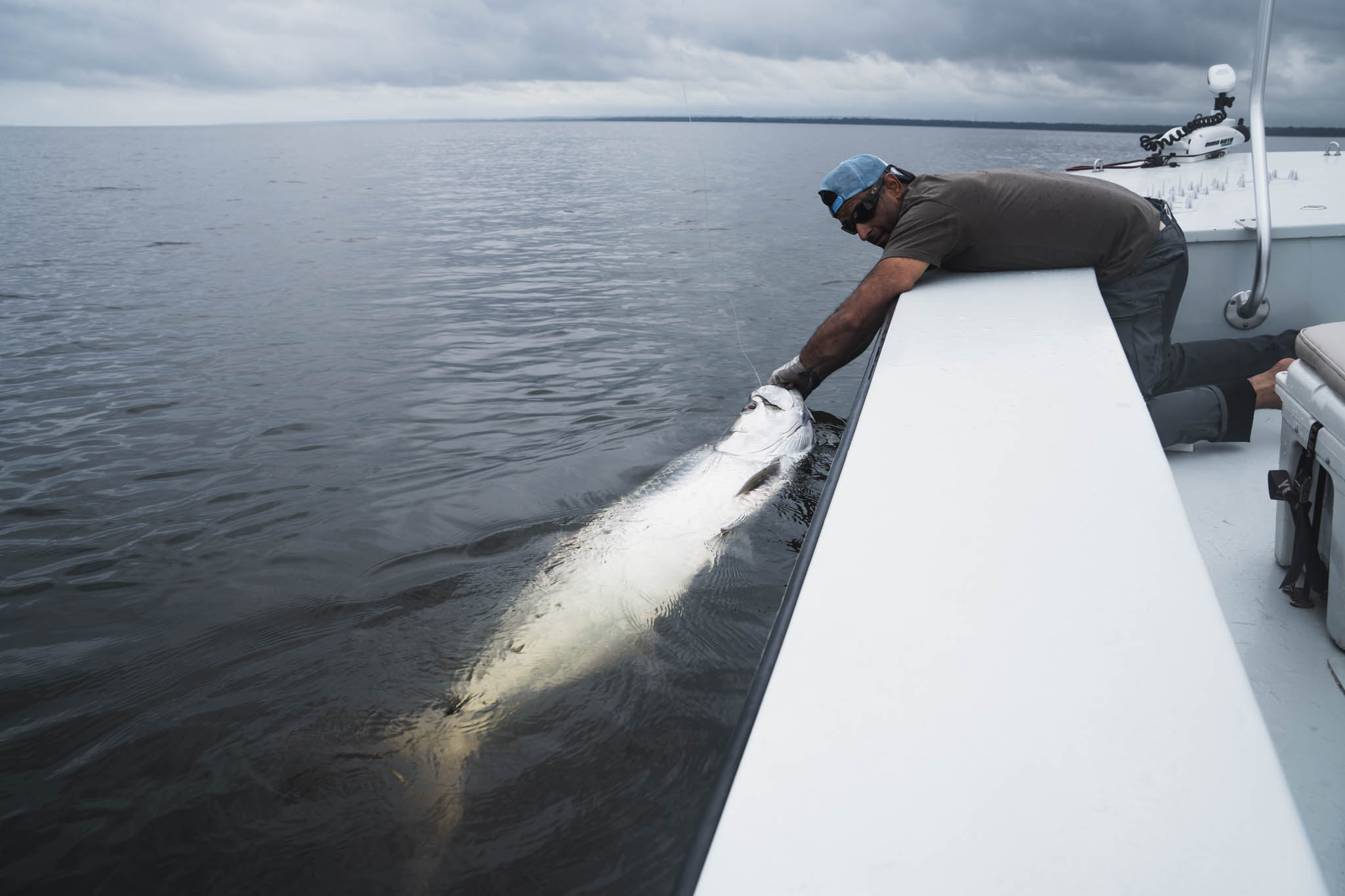
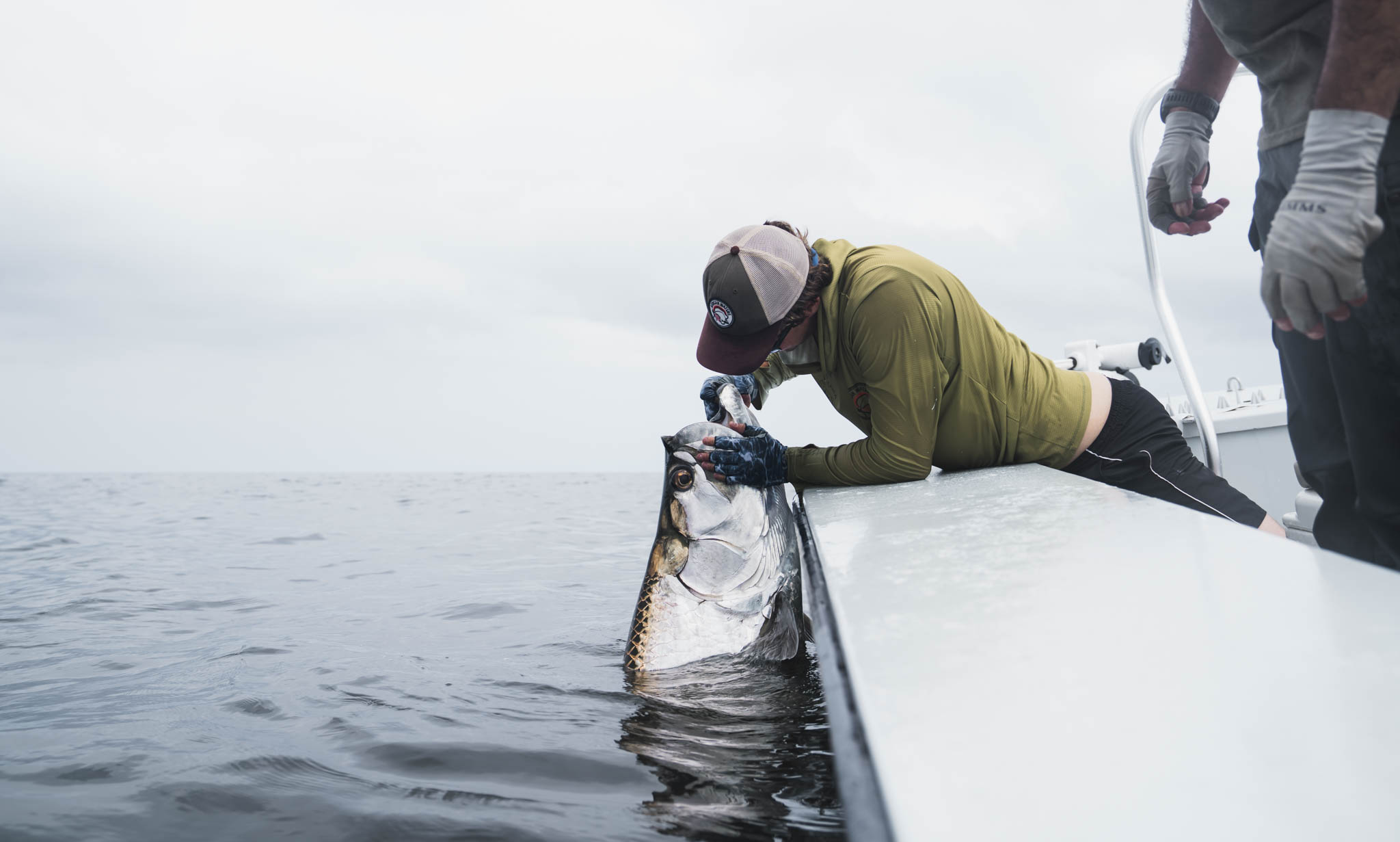
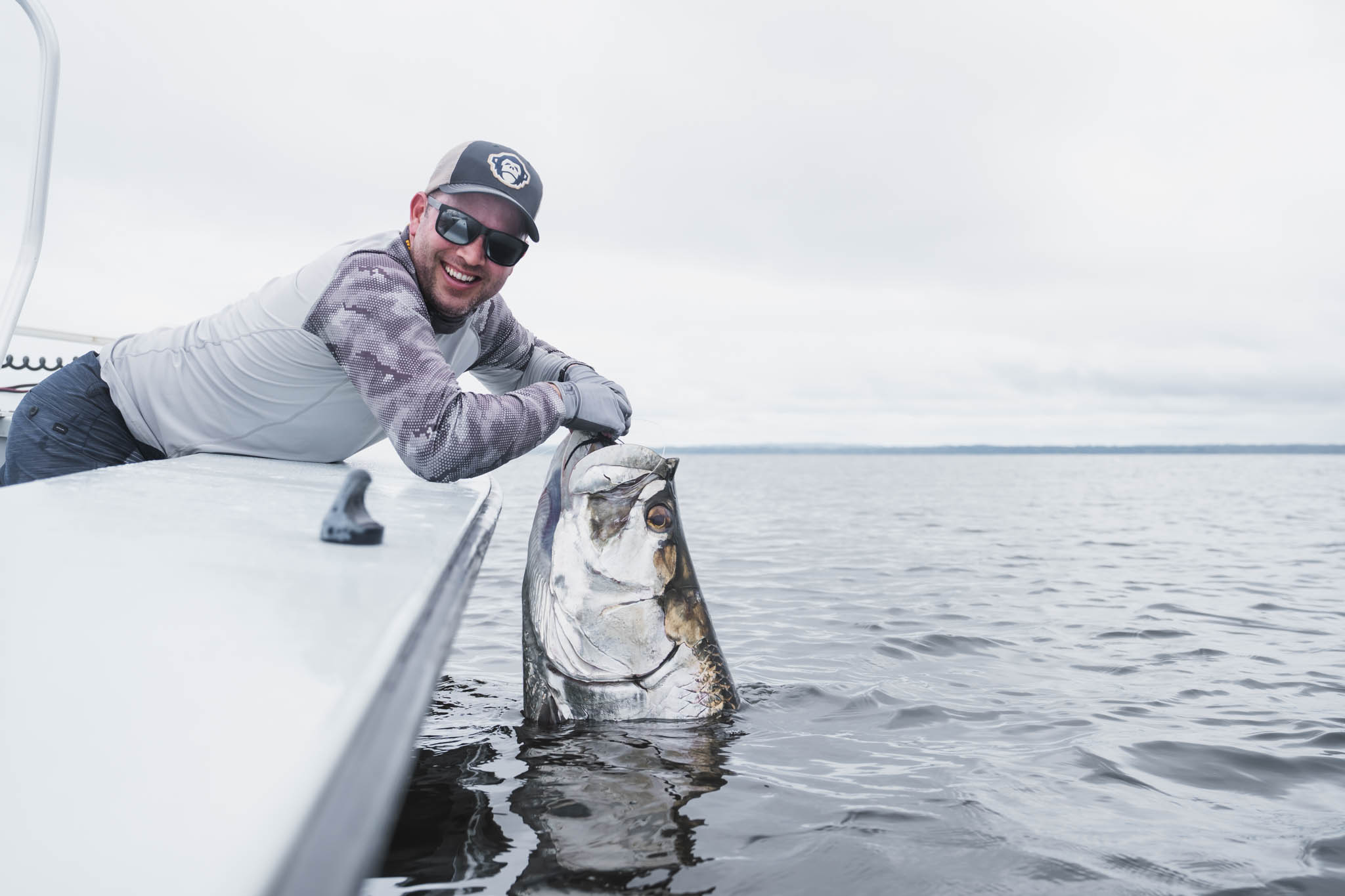
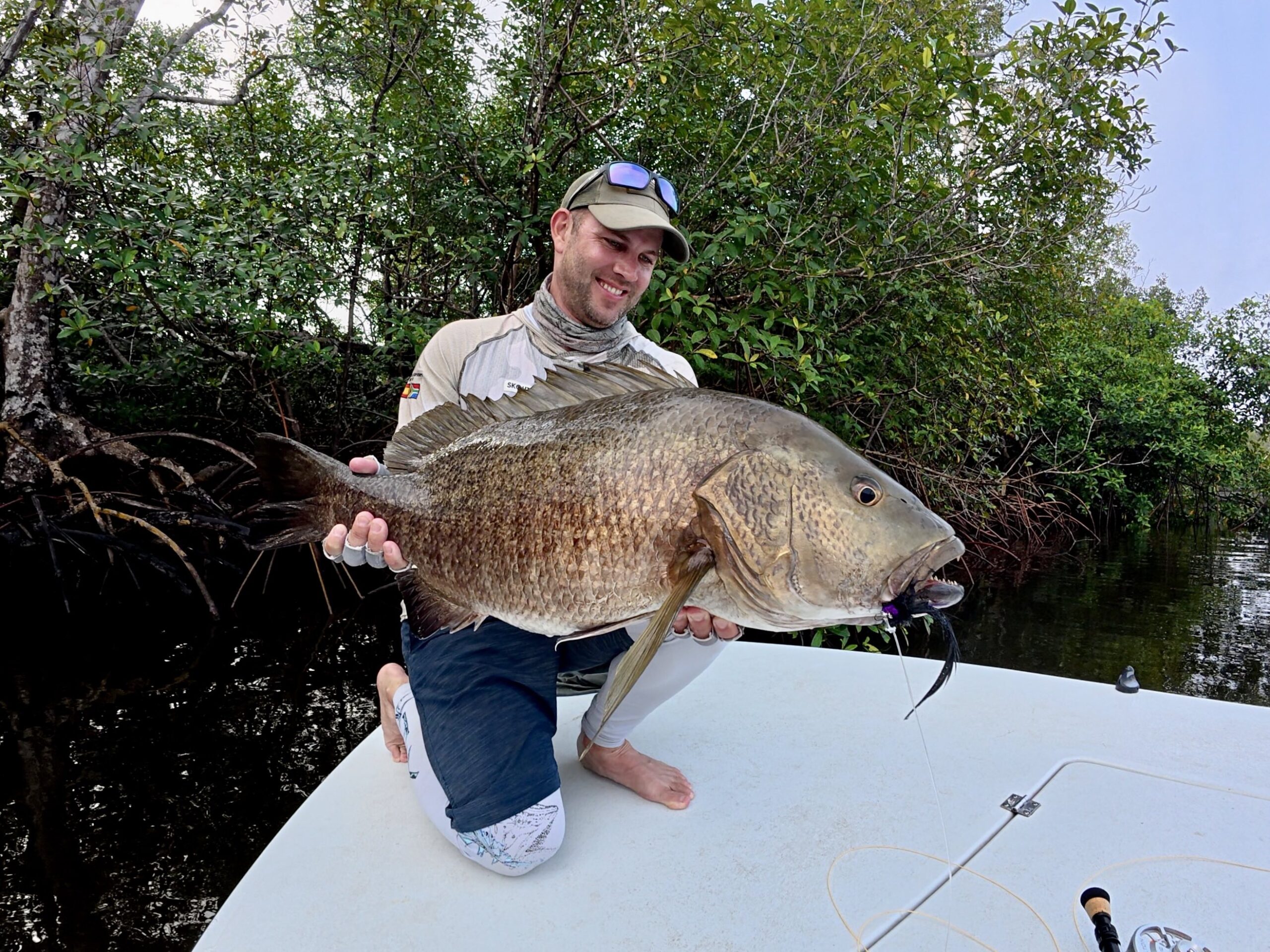
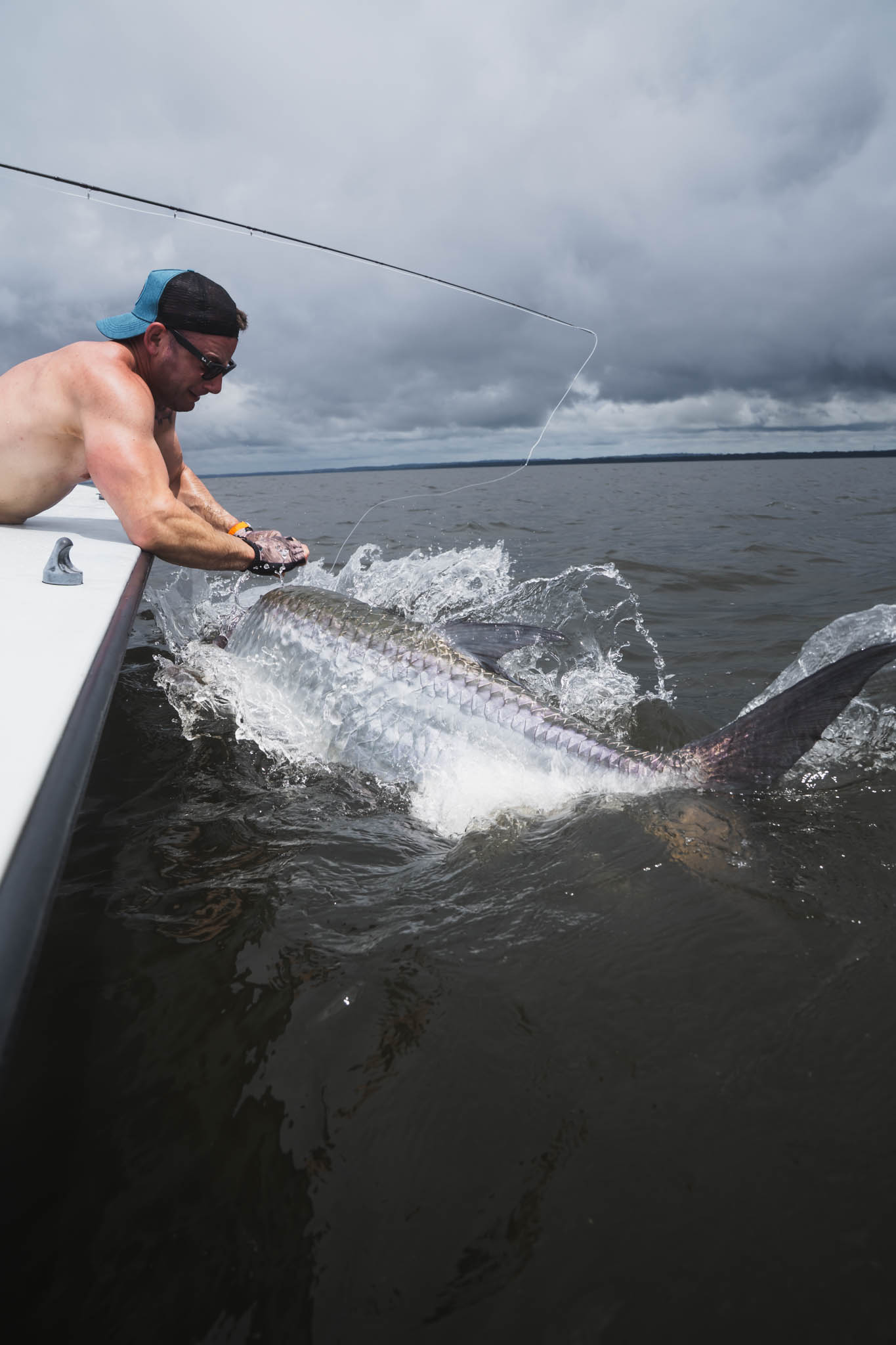
Across four days, the group landed eight tarpon, with many more jumped and lost. Fish ranged from roughly 80 to 200 pounds, testing both tackle and technique. Every fish was handled with care. We practise strict catch-and-release on all tarpon, keeping fish in the water as much as possible, limiting photos, taking quick measurements and releasing them in strong condition. These are long-lived, migratory fish, and looking after them is non-negotiable.
Catch of the Week: Power, Patience and Near Misses
Some fish stay with you long after the week ends.
Dan’s fish was one of those. We found it laid up tight on a shallow contour. The cast was perfect and the eat was instant. What followed was a two-and-a-half-hour battle that tested everyone involved. We managed to get hold of the leader multiple times but could not turn the fish’s head. When the hook finally pulled boatside, it was clear this was a genuine 200-pound-class tarpon. Losing a fish like that hurts, but it also reminds you exactly what you are dealing with out here.
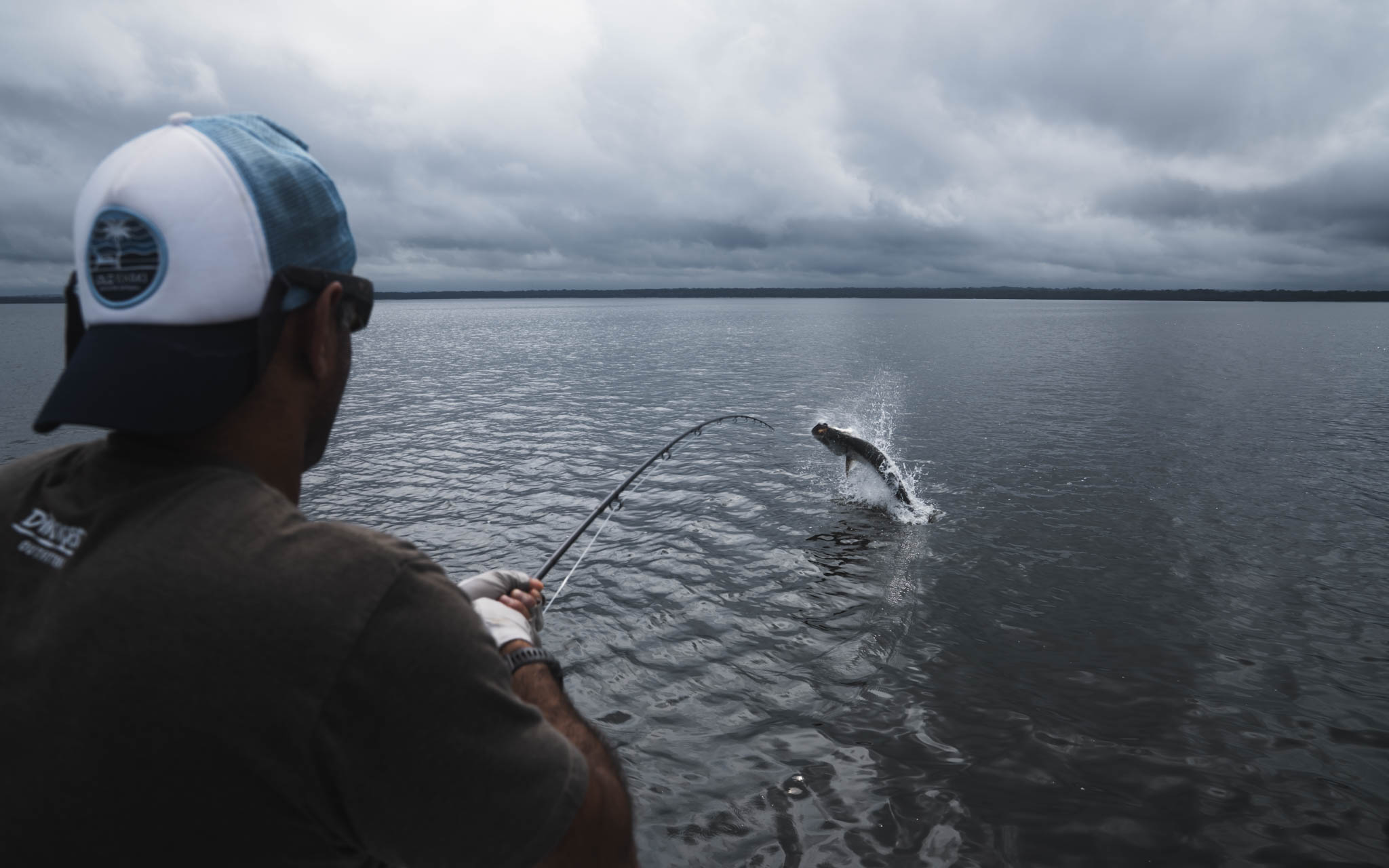
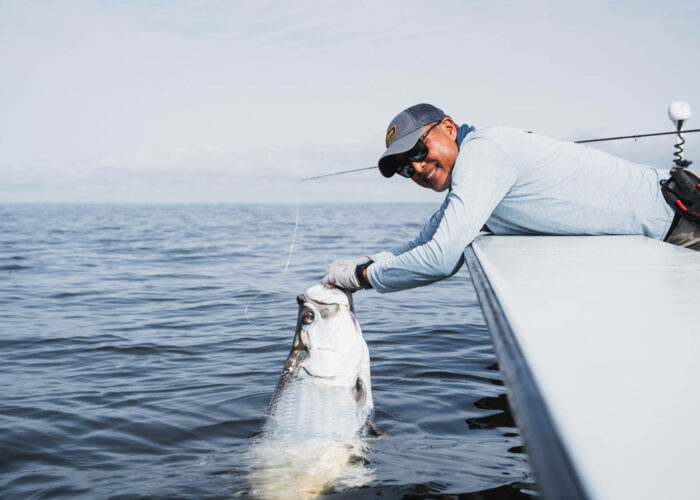
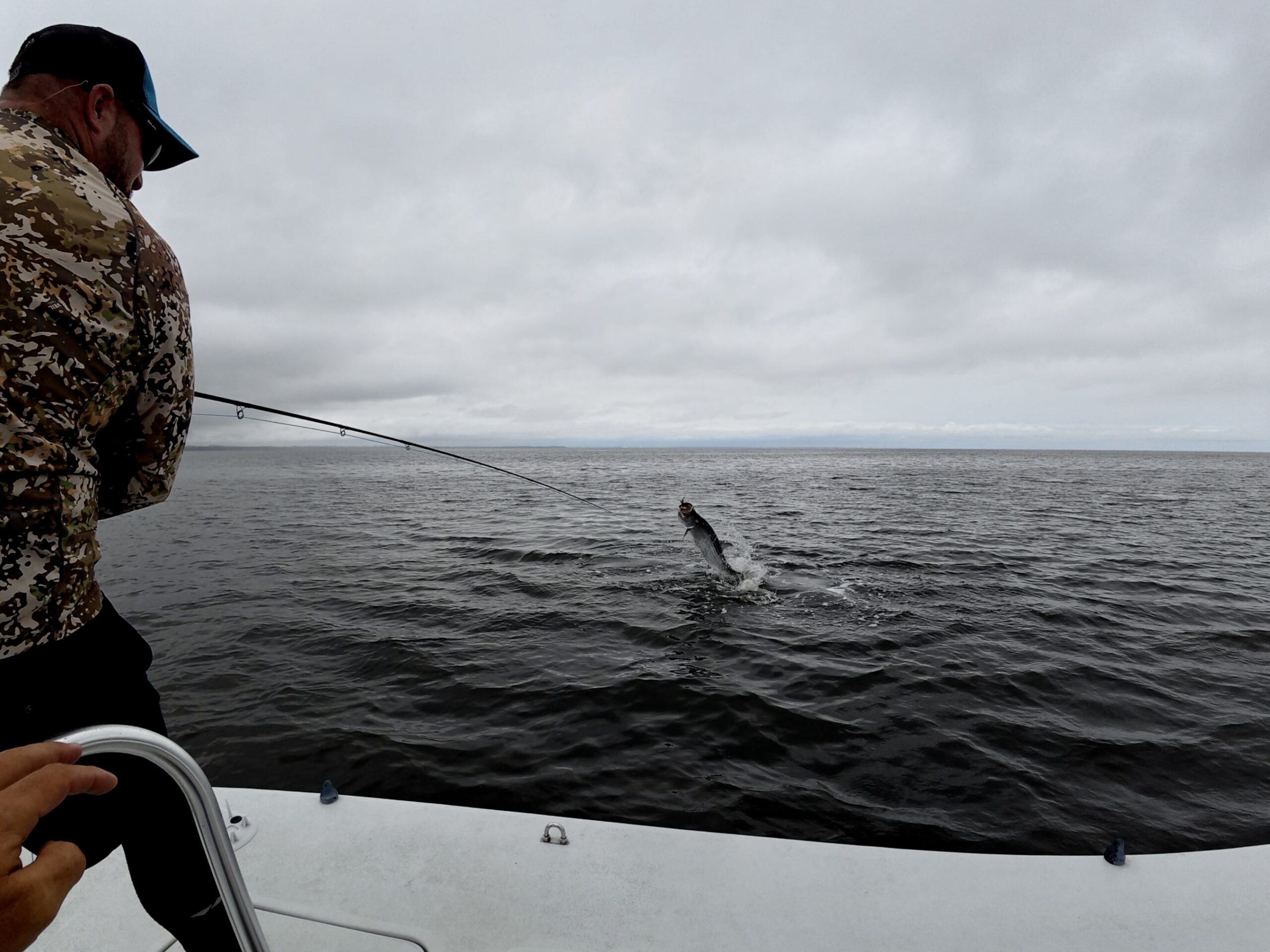
Garth’s contribution to Catch of the Week came the following day and ended very differently. Chasing a string of rolling fish, the take came right at the boat with the leader inside the rod tip. In the chaos, the tip section was torn off, reattached on the fly, and the fight carried on. After an hour and twenty minutes of steady pressure, long runs and repeated jumps, we brought a broad-shouldered 150-pound tarpon alongside the skiff. Quick photos, careful handling and a strong release rounded off a hard-earned win.
Week Two: Fast Starts, a Weather Curveball and a Strong Finish
The second group arrived as the first wrapped up, stepping straight into hot fishing. Conditions remained favourable for most of the trip, with just one unexpected interruption.
Day one set the tone. Calm water allowed shots at both laid-up fish and rolling schools, and three tarpon were landed on the first day. For any angler, that kind of start builds confidence fast.
Day two threw a curveball. Unforecast wind made sight-fishing difficult and slowed the bite considerably. These days matter, though. They force you to adjust expectations and work harder for fewer chances.
Day three saw conditions settle again, and the fish responded immediately. Quality opportunities returned, and three more tarpon were landed to close the trip on a high note. Across the week, six tarpon were brought to hand over two excellent sight-fishing days, with all fish released carefully.
Catch of the Week: Chris Mathews’ 150 lb Giant Megalops Atlanticus
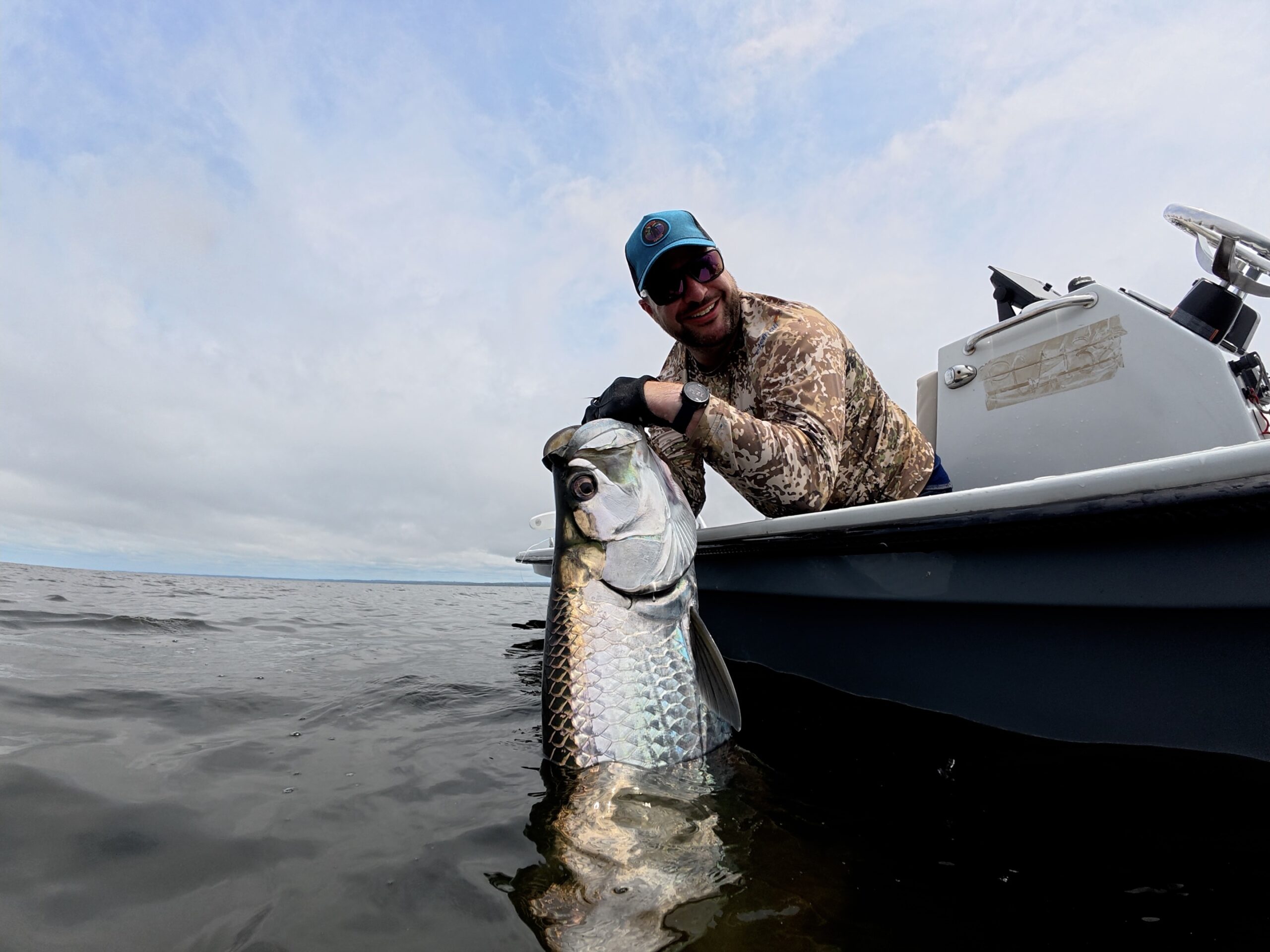
This week’s standout fish went to Chris Mathews. After already landing two tarpon earlier in the day, the bite slowed and fish became scarce. While covering water, Chris made a relaxed cast out the back, let the fly sit, then twitched it once. The response was instant and violent.
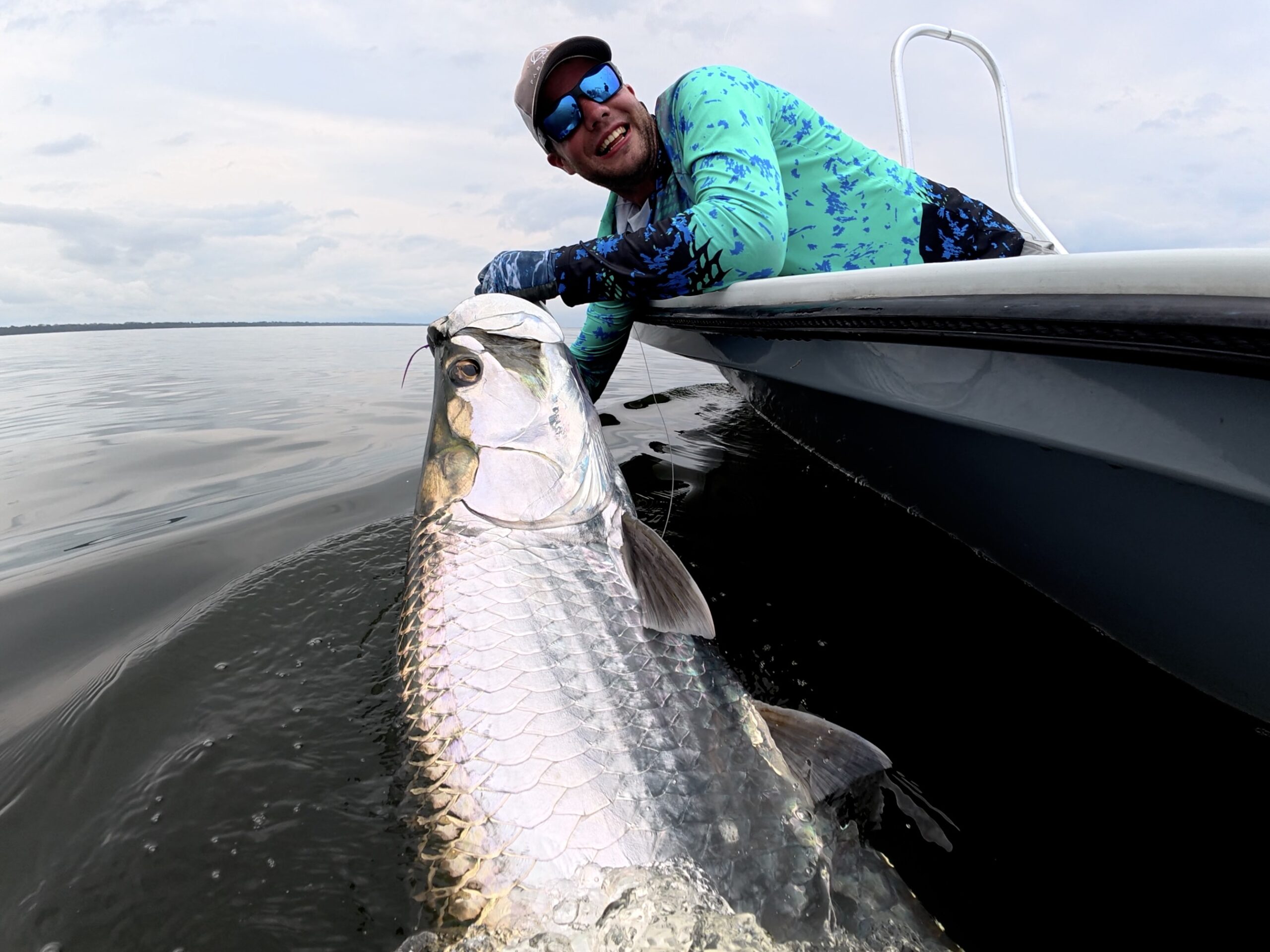
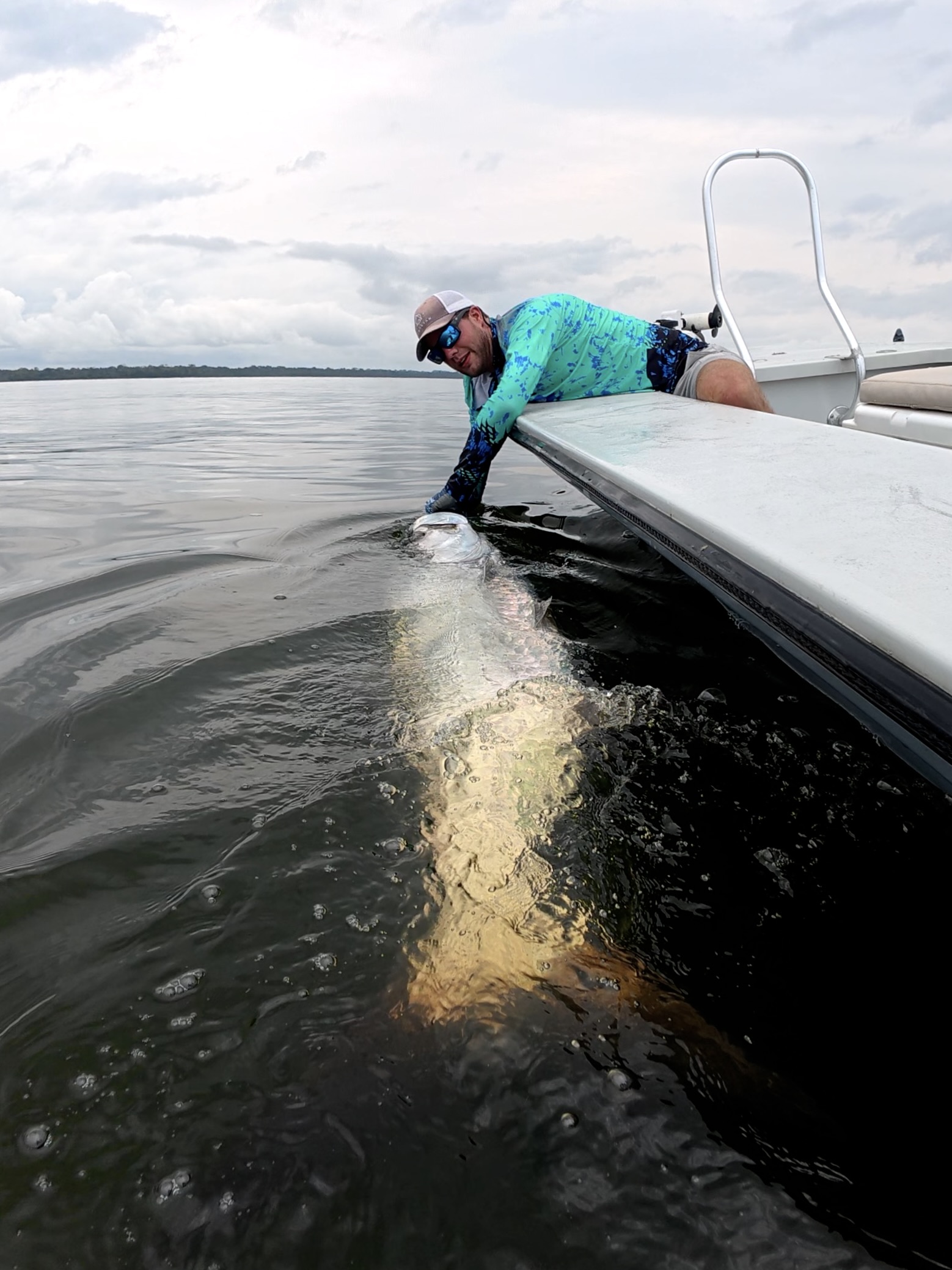
The tarpon jumped repeatedly before ripping close to 100 metres of backing from the reel. After settling deep, the fish demanded steady pressure and patience, surfacing periodically to breathe and showing just how much stamina these fish have. Just under an hour later, we had hold of a magnificent 150-pound tarpon. Measurements and photos were taken quickly, and the fish was revived and released strong.
What You Can Take From These Two Weeks
When tides and weather align, Port-Gentil offers some of the most engaging tarpon flyfishing you can experience. You get variety in how you fish, genuine shots at very large Megalops Atlanticus, and conditions that reward calm decision-making rather than rushed casts.
If you are thinking about a Port-Gentil tarpon trip this season, this is the window you are looking for. The fish are here, the guides are dialled, and the system is settling into a productive rhythm.
If you want to turn days like these into your own story, get in touch and start planning your Port-Gentil tarpon trip.