
You have 0 items in your cart
Brush Flies
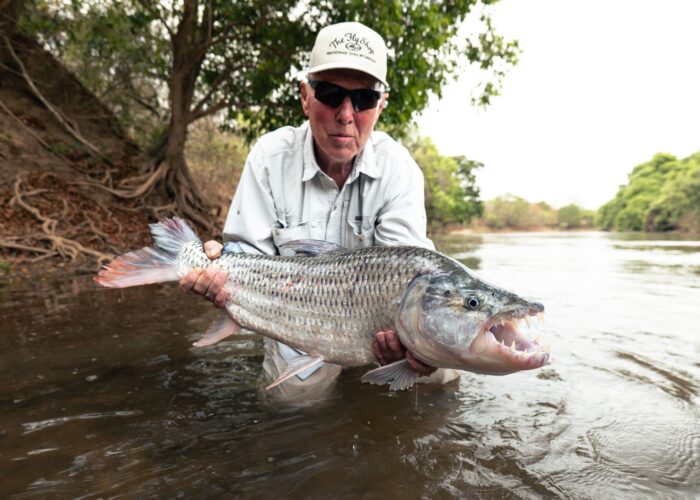
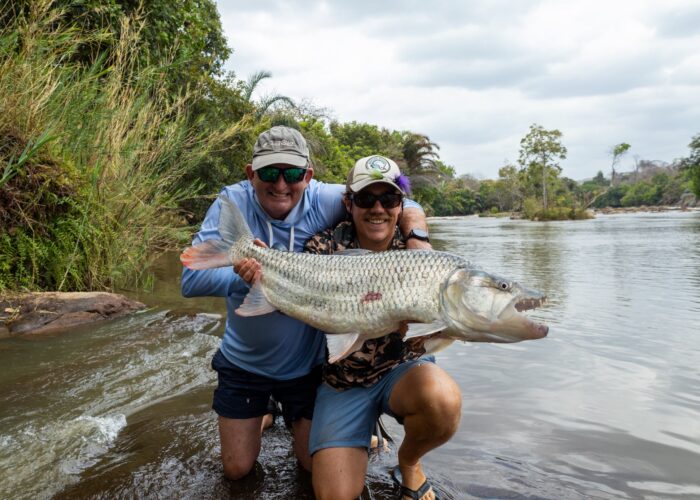
Brush Flies: If you’re looking for a highly effective tigerfish fly pattern, the Brush Fly is a must-have in your tackle box. These large-profile flies are designed to push water and create an irresistible movement that triggers aggressive strikes. At our camps across Africa, we rely on them for a range of predatory fish, including tigerfish, Nile perch, and jack crevalle.
Why Brush Flies Are a Must-Have for Predatory Fish
Brush Flies are known for their ability to mimic baitfish with a broad profile and natural movement. While they’re conventionally tied using a composite loop, our guide and expert tier David Taylor has developed a different approach that improves colour blending and simplifies the process.
How David Taylor Ties his Brush Flies
In his latest How-To video, David breaks down his unique method for tying the Brush Fly step by step. This variation has been tested extensively on the Faro River in Cameroon, as well as the Mnyera and Ruhudji Rivers in Tanzania, where it consistently produces results for tigerfish.
Materials and Tying Tips from David
For those looking to tie this fly themselves, here’s what you’ll need:
- Hook: 3/0 – 8/0 if using SF fibre for the head; for #1 – 2/0, use sculpting fibre/sculpting flash fibre. In this instance, David used a 3/0 Tiemco 600SP.
- Thread: 200D Nano Silk for strength and minimal bulk.
- Tail: A mix of tan and olive 5–7” saddles. If tying smaller sizes, look for shorter feathers and tie them in where the fibres transition to marabou at the base for a natural taper. Use 5–6 feathers for 3/0–5/0 hooks, and 8 feathersfor 8/0 hooks.
- Bucktail: Olive was used, but you can match it to your preferred colour scheme.
- Marabou: Tan was used in this case, but colour choice is flexible.
- SF Fibre: Bleeding perch was used for this fly, but feel free to experiment with different colours, even mixing colours for the first and second clumps.
- Eyes: 6 or 8mm stick-on eyes for added realism.
- Glue: Glue Genius by Glue Devil for securing materials.
This pattern allows for plenty of colour customisation, so don’t hesitate to experiment with different combinations to match the baitfish in your target waters.
Get the Edge on the Water
If you’re serious about targeting big, aggressive fish, you need this pattern in your arsenal. Watch David’s video now and see why the Brush Fly is one of our most trusted patterns for predators!

This is one of the best tying videos I’ve ever watched! Of course it’s a year too late for my trip but now I know what a SA brush fly is. I just used EP brushes for mine. It was great to see Dave again, he was a great guide in Tanzania and fun to fish with. I’m glad he didn’t laugh too hard at my lousy flies (but they did catch two tigers!)…Cheers, James!