You have 0 items in your cart
Tarpon Fishing in Gabon West Africa
Tarpon fishing in Gabon West Africa has been a part of my life for longer than I realised at the time.
I have been fortunate to spend a significant part of my life in Gabon. From the early African Waters days, back when we were still Tourette Fishing setting up in Sette Cama in 2012, through to the pandemic, that stretch of coastline became more than just a workplace to me.
Of all the fisheries I guided in, Gabon was the only one that genuinely made me sad to leave at the end of each season.
There is something about fishing the Sette Cama river mouth and surrounding surf at night that is difficult to explain. Your eyes slowly adjust to the dark and, depending on the moon phase, you can see more than you expect. But it is your other senses that sharpen. The smell of jungle mixing with tannin-stained sea water. The soft white sand squealing under your feet. The distant crash of swell. The sudden explosion of a snapper or tarpon smashing bait somewhere out there in the blackness. Sometimes you see the faint flash of scales under moonlight. Then comes the shout of “fish on”, followed by the bouncing glow stick on the back of an angler’s jacket as he leans into something powerful.
It is a feeling of freedom that is almost impossible to explain to someone who has not stood there.
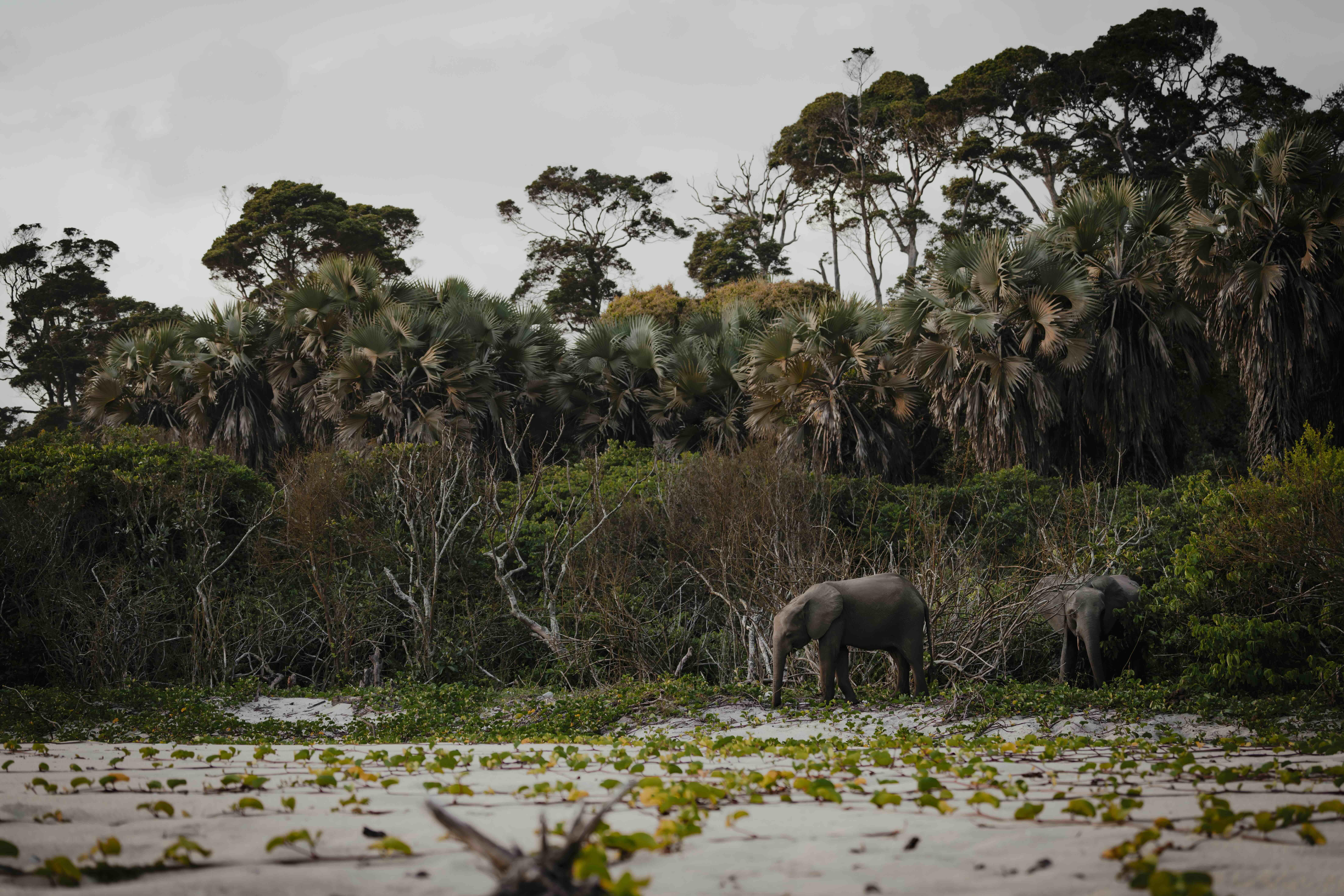
It was not just the fishing. It was everything around it. Morning runs where you would cross fresh elephant tracks or hear parrots overhead. Bumping into gorillas in the forest. Walking back along the beach at night knowing leopards moved through that same stretch of sand. During the rainy season the whole system changes. The forest thickens, darkens, comes alive. Even on slow days, you felt lucky just to be there.
Closing That Chapter
In 2020 I stepped away from full-time guiding to be closer to my wife and our now almost four-year-old daughter.
That final week felt like something out of a film. I finished guiding while filming with a camera crew during a run of fishing that only happens once or twice in a season. Everything lined up. Arguably the best week I have ever experienced on the water.
I remember looking out of the plane window as we lifted off over the lagoon. The jungle stretched endlessly below, lightning flickering in the distance. I felt strangely content. Not sad. Not emotional. Just satisfied. I had closed the chapter exactly how I would have wanted to. At the time, I did not think I would ever open it again.
Coming Back, But Differently
Six years later, African Waters has grown, and now includes the Port Gentil Tarpon Experience.
I had been to Port Gentil many times before, but never once had I fished there.
So when the opportunity came to spend a week fishing as a guest alongside African Waters client and good friend Mark Bielovich, I did not hesitate.
There is something very different about stepping into a fishery as a guest after years of guiding. You notice more. You slow down. You allow yourself to feel the anticipation instead of managing everyone else’s. You are present in a way that is easy to forget when you are responsible for everything.
Port Gentil feels different to what most people expect from West Africa. Blue water, white sand, palm trees, and a town that is compact and easy to move through. Everything close. Everything simple. The structure of the operation reflects that. You meet the skiffs on the beach before sunrise, fish through the morning, and by mid-afternoon you are back on land with the rest of the day open. That rhythm grows on you quickly.
The guide team for the week was made up of Oli Santoro, Shaun Fredrikson, and Chris King. Three very different anglers, each with their own way of reading water and approaching fish, but all of them properly dialled into this system. It was good to spend time on the water with each of them, seeing how they worked through different conditions.
The Fish You Don’t Land
Most mornings started with scanning for rolling fish. When the wind drops completely, the tarpon sit on the surface.
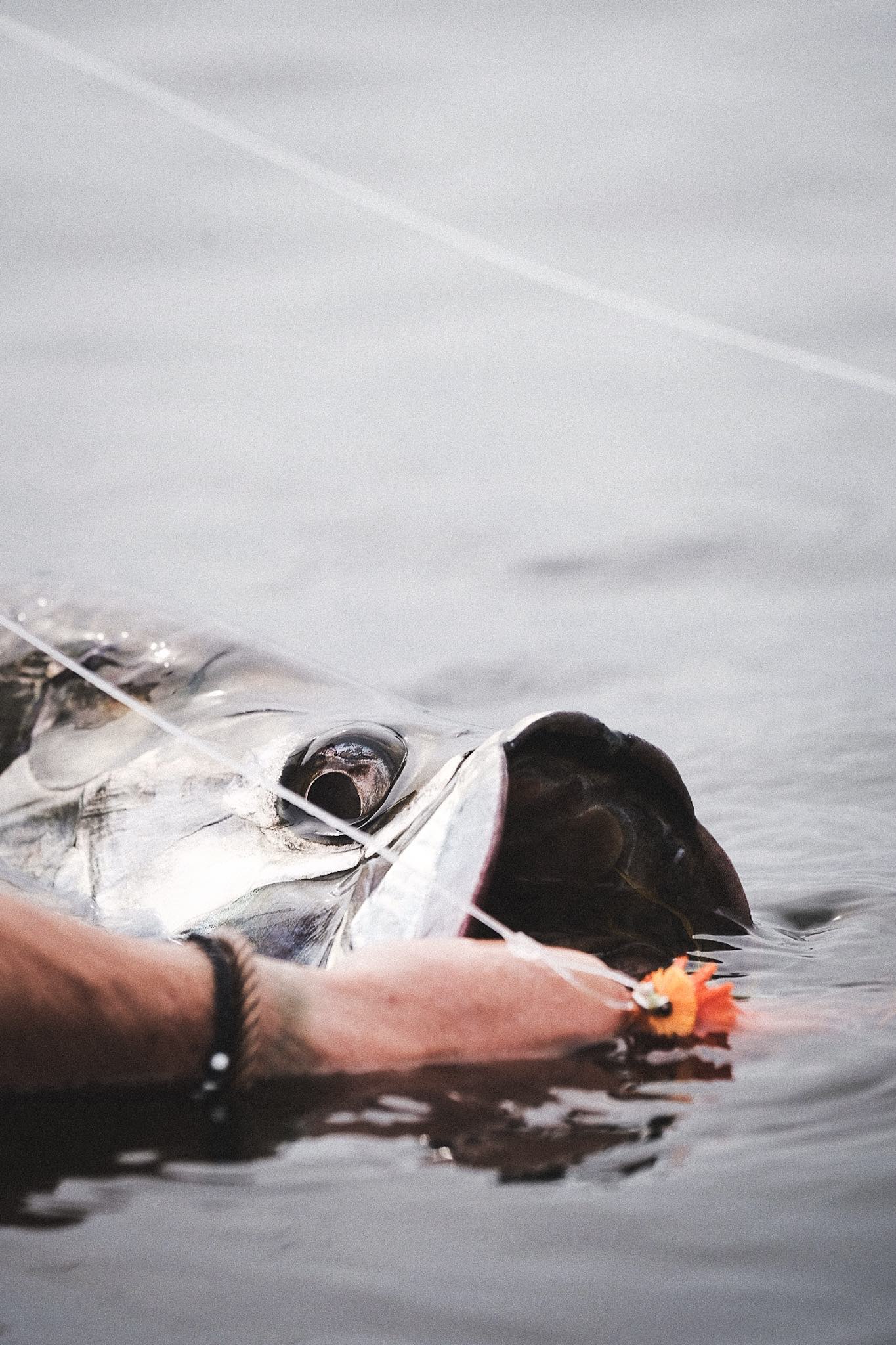
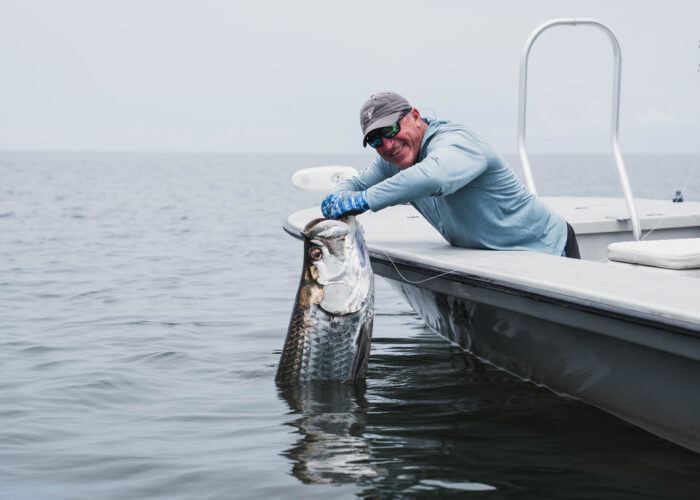
Seeing a 150 lb plus fish laid up in clear water, and hearing your guide say “three-quarter fly line, two o’clock”, still gives you that same feeling in your chest. Even after years of guiding and fishing, it does not go away. And if it ever does, it might be time to find something else.
We had good fishing during our stay. Some sessions better than others, but when it came together, there were tarpon active for as far as you could see. Tarpon on tarpon on tarpon, and not much else. Not a bad problem to have.
Day three stood out.
The sea was like glass. You could not tell where the sky ended and the ocean began. It was humid, heavy, and quiet. We were seeing fish, but they were scattered, so we started making blind casts while searching.
I was standing on the back of the boat when my fly landed. Out of the corner of my eye, over my right shoulder, I saw one of the biggest tarpon I have ever seen. I have spent enough time in Sette Cama and at Rio Colorado in Costa Rica to have handled some serious fish. This one was enormous. It actually gave me a fright.
I shouted to Mark, “Did you see that?”
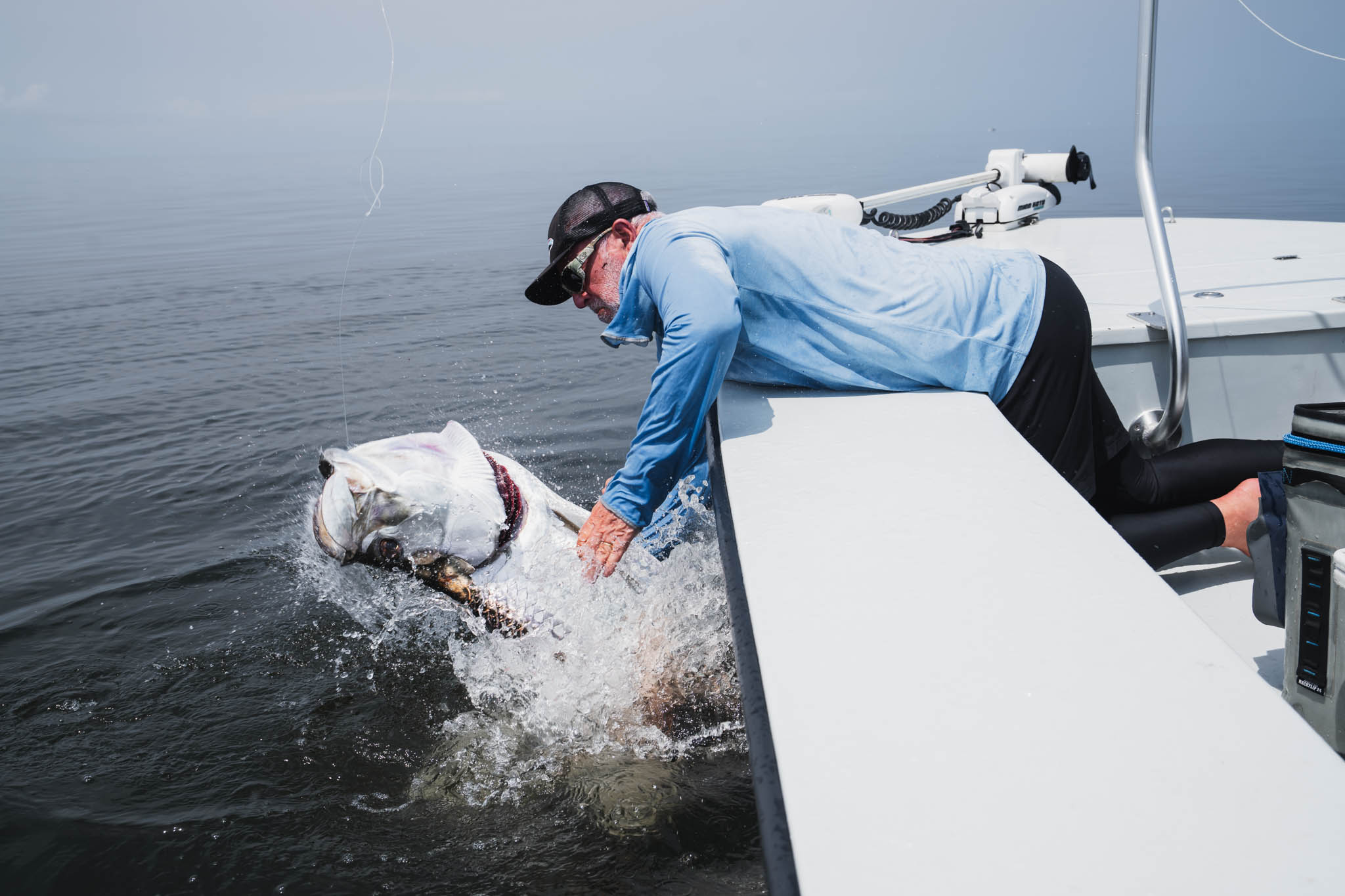
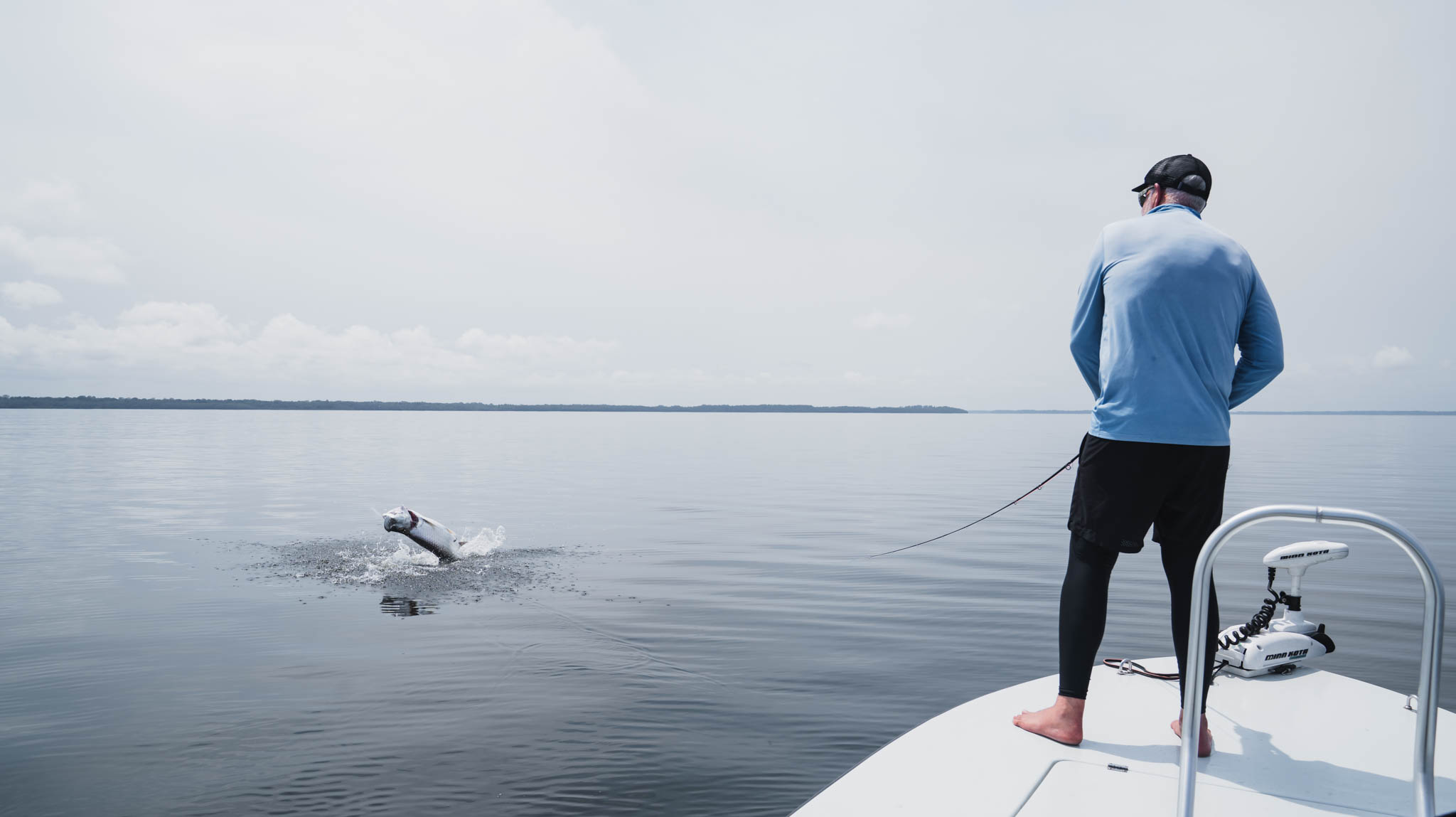
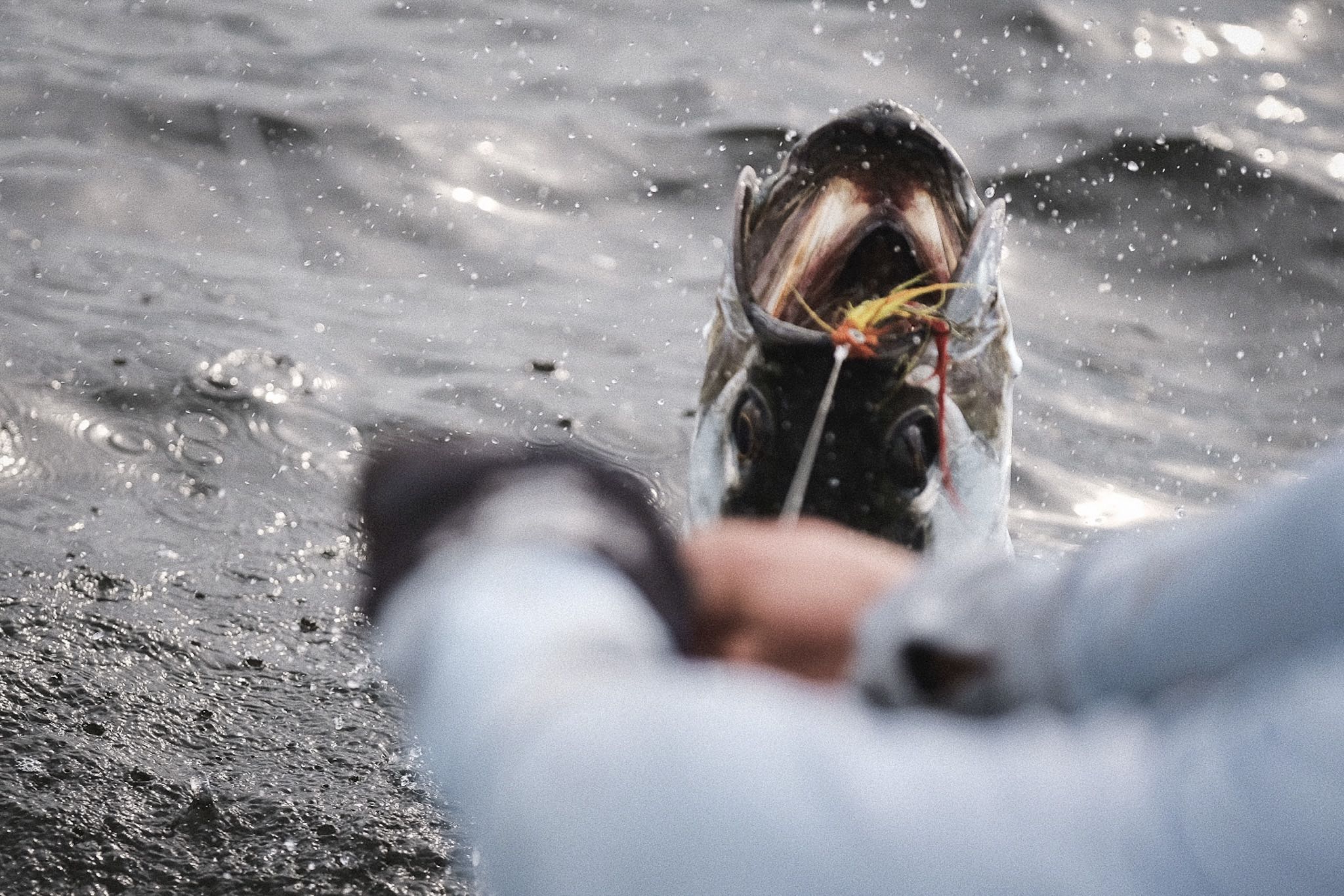
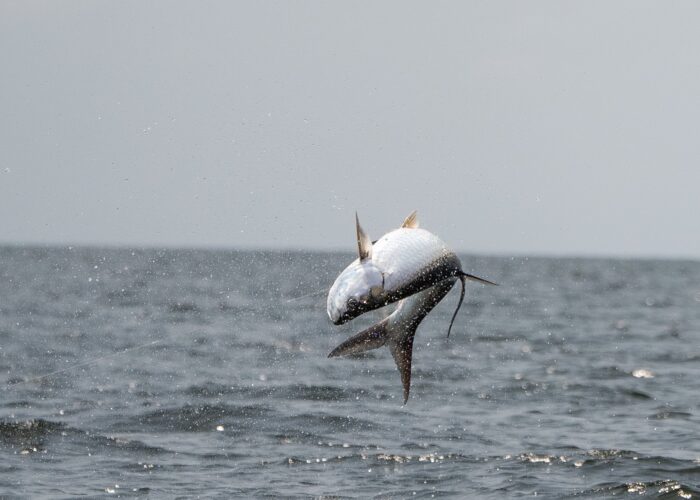
Before the words were even out, he dropped his fly about 45 degrees behind the boat. The fish was not spooked. It just turned, swam straight towards the fly, and ate. As the line came tight, everything erupted. The water in front of us turned into chaos. The backing knot started ticking through the guides, and then the reel just emptied. The fish tried to jump, but it did not clear the water properly. It breached like a whale, half out, before crashing back down. We were into the backing quickly, and Shaun did not hesitate. We gave chase.
Mark handled it well, even as the backing disappeared faster than anyone would have liked. There was urgency in Shaun’s voice, and you could feel things getting close. Eventually, we got the fish back under some sort of control. It stayed deep, but everything started to settle. Communication was good. Mark kept the right angles. Pressure stayed consistent. Shaun kept the boat positioned perfectly.
It almost felt too easy. After about forty-five minutes, the fish came up. It rolled near the surface, tail out of the water, almost like it was done. It felt like it was over.
Then it made one slow dive.
The line went slack.
The fly came loose.
No one said anything.
Mark just stared at the water. No swearing. No frustration. Just disbelief.
We had done everything right. But that is tarpon fishing. You win some, you lose most. And the ones you lose like that are the ones that stay with you.
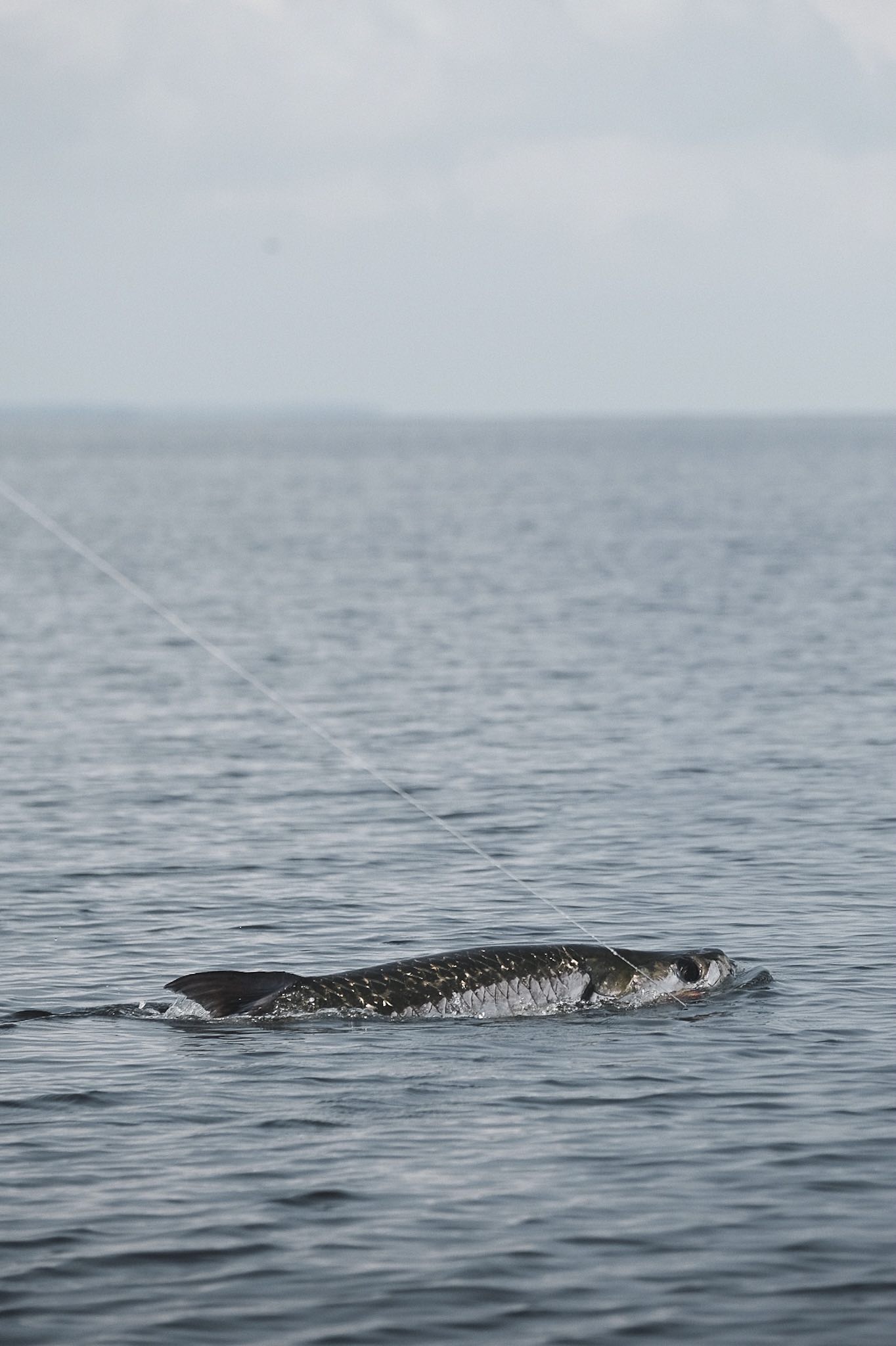
You remember this one.
A Change of Pace
On our last day, the tides were too strong for the tarpon grounds, so the guides decided to head offshore.
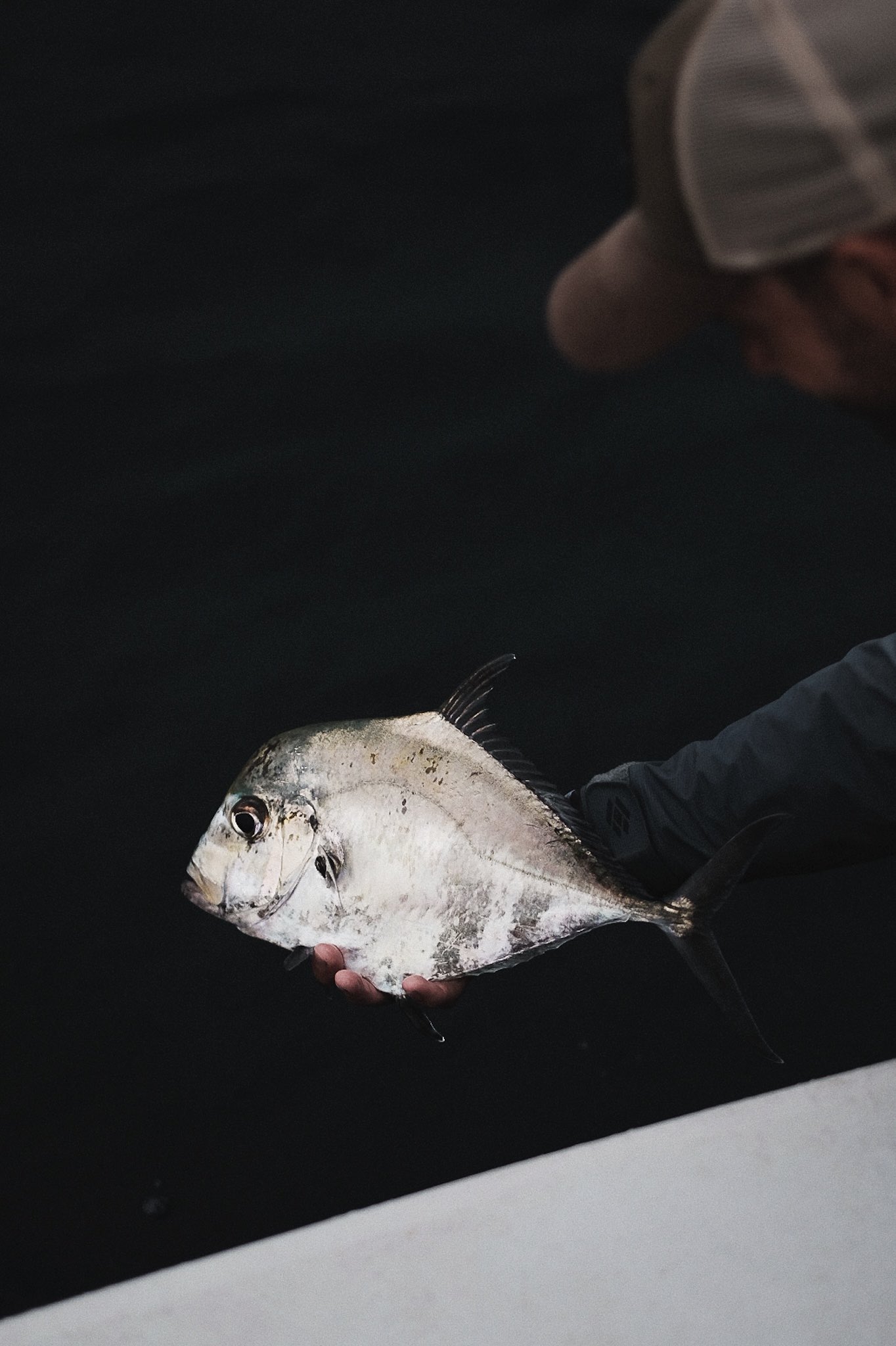
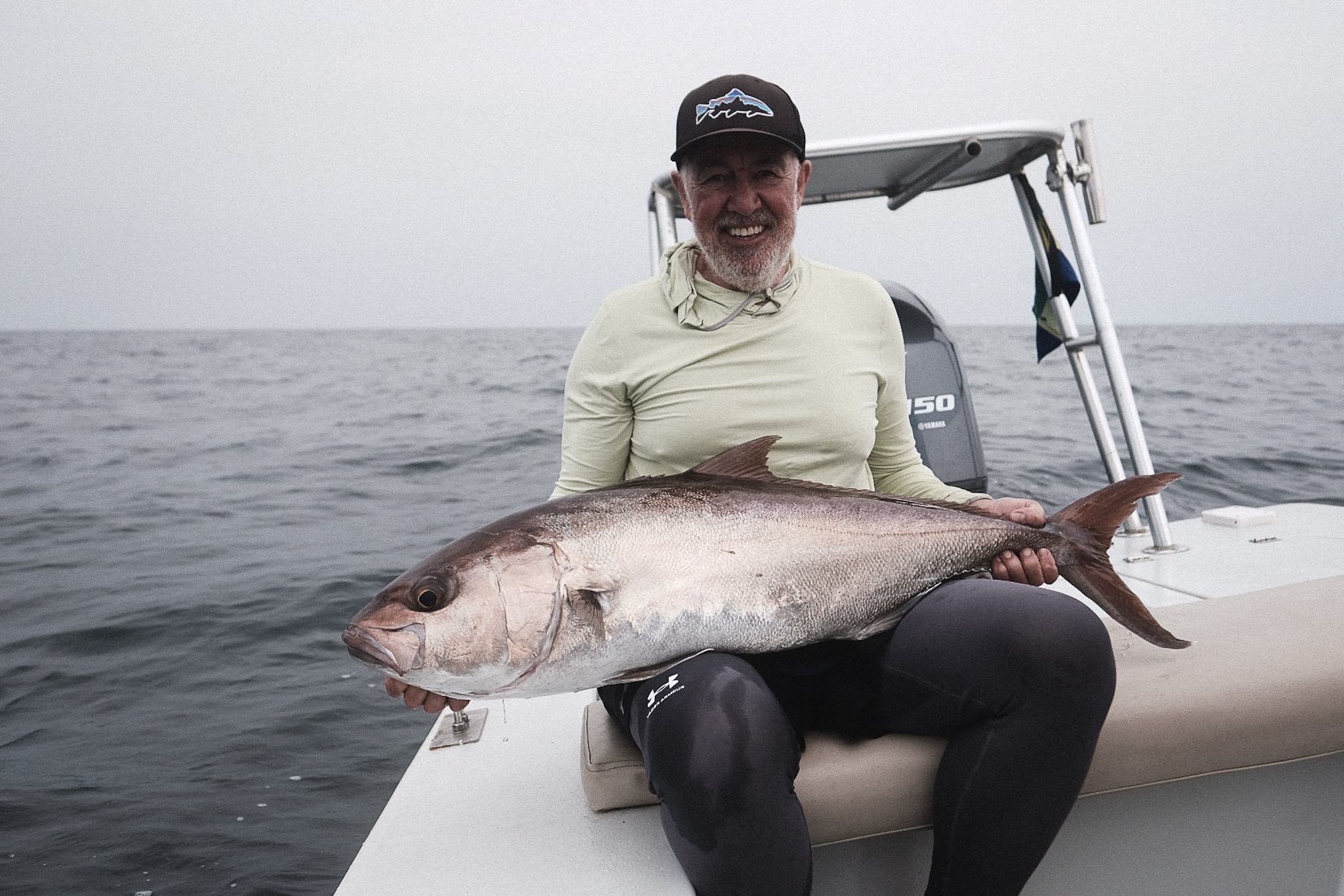
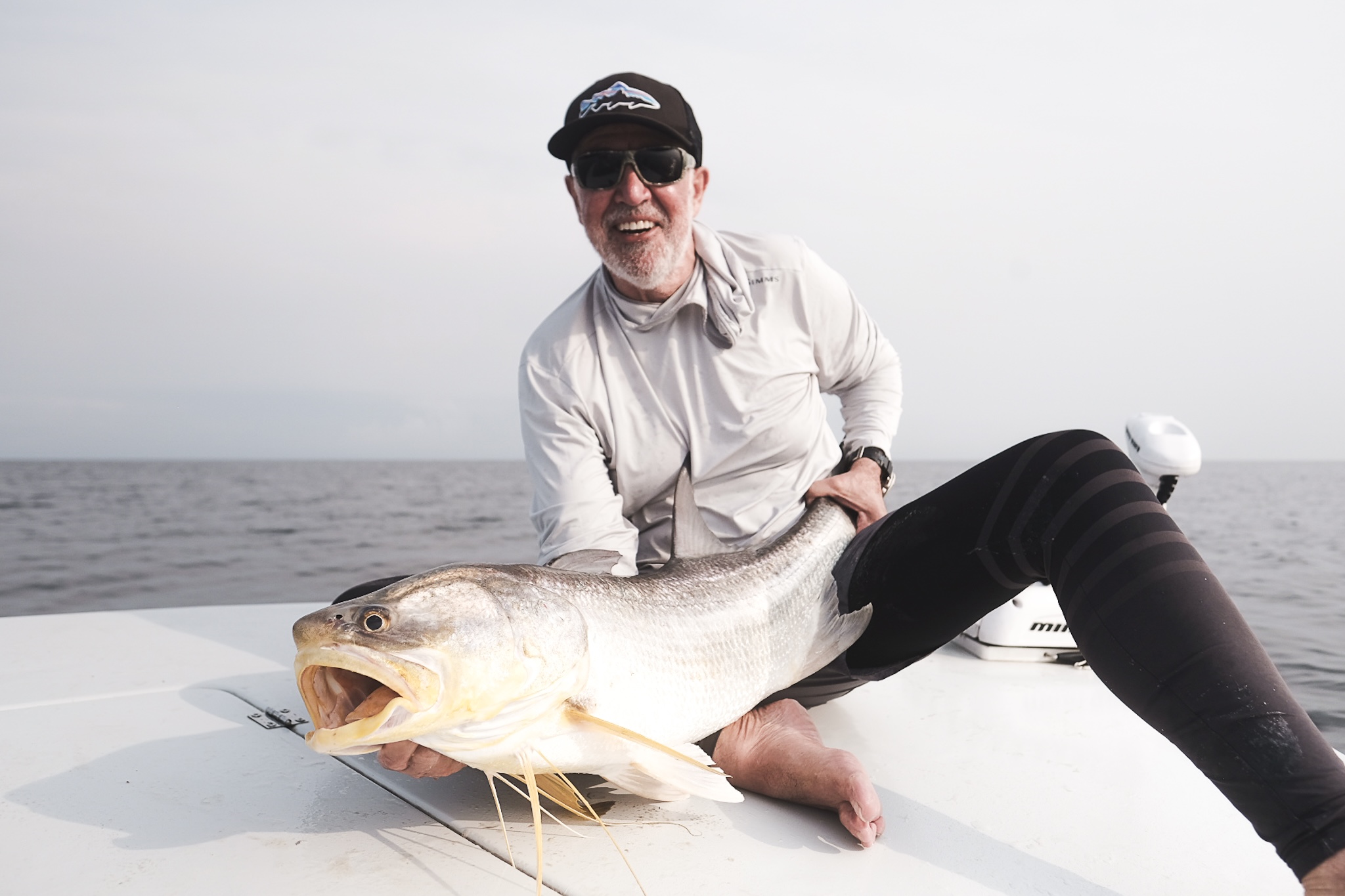
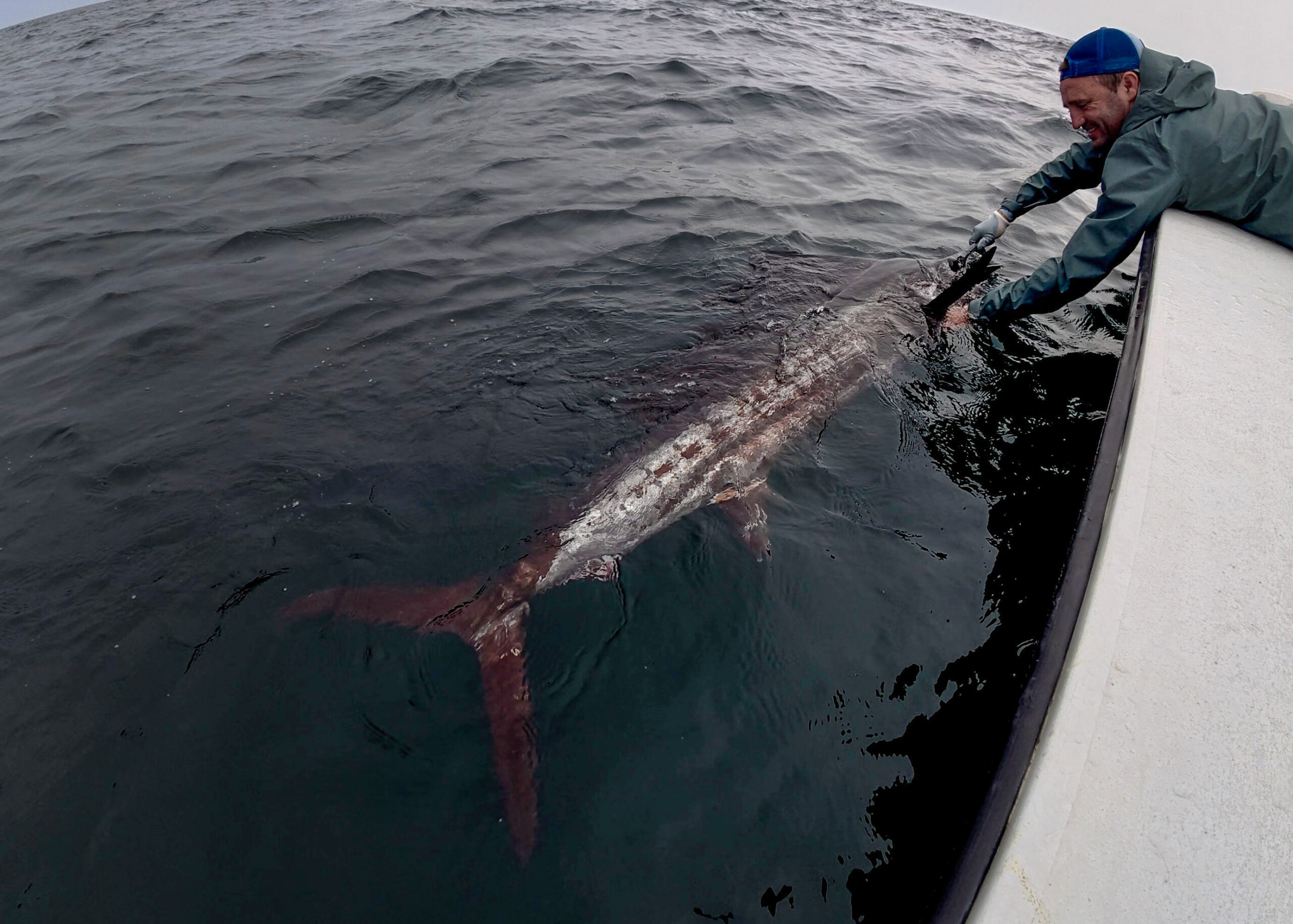
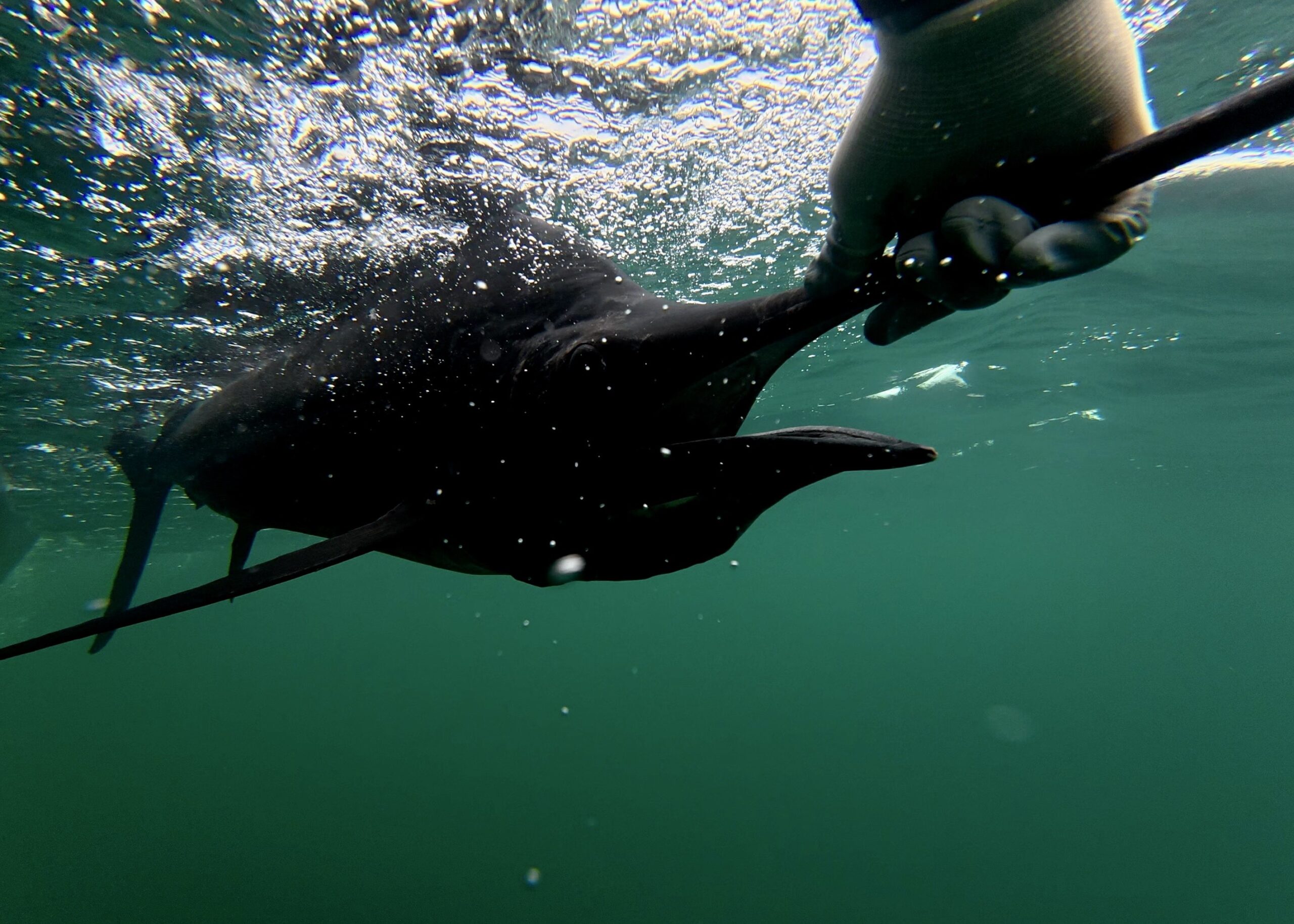
We did not expect much. We were in the middle of tarpon season, and the focus is usually elsewhere. But it turned into one of the most enjoyable days of the week. We fished light jigs for a mix of species, then moved deeper and dropped baits for amberjack, which worked well. Somewhere in all of that, I hooked my first sailfish.
It was chaotic in a completely different way. Fast, aggressive, constant action.
After the intensity of the tarpon fishing, it felt almost light-hearted. A proper change of pace.
Why It Stays With You
The experience ended up being more than I expected. The fishing delivered, but so did everything around it. The rhythm of the days. Early mornings. Coffee on the boat. Running along the beach at sunset. Evenings out. Time to switch off between sessions. Port Gentil left me with that same pull I once felt in Sette Cama. Not just because of the fish, but because of how the place makes you feel while you are there.
If you are looking at tarpon fishing in Gabon West Africa, it is not just about the fishing. It is about whether you want something that stays with you long after you leave.
Mark Murray
African Waters
Plan your Tarpon Fishing in Gabon West Africa
If you are considering tarpon fishing in Gabon West Africa and want to understand how the Port Gentil experience fits into your plans, get in touch and we will talk you through it properly.